Yeonheun Roasters in Seoul Turns Timeworn Details into Warm Cafe Design
- Daily Coffee News Staff
- 479 views
Restored terrazzo, reclaimed wood and Korean craft traditions shape this 60-square-meter Seochon cafe into a welcoming neighborhood room.
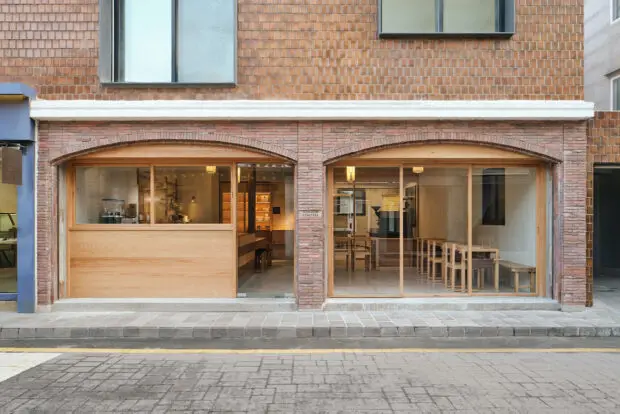
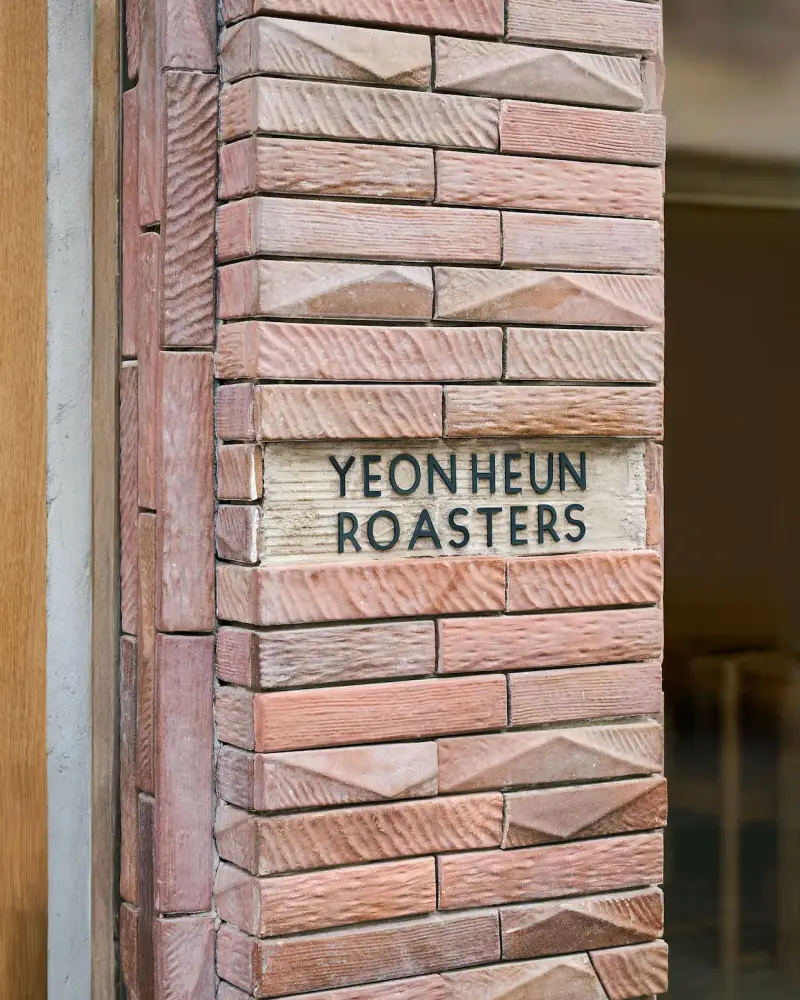
At Yeonheun Roasters, age is part of the design. In a 60-square-meter cafe in Seoul’s Seochon neighborhood, Sherpa built a warm interior around marks left by time: restored terrazzo, reclaimed timber, exposed grain and architectural features brought back into view. The project’s central idea is that these traces can give a small cafe a sense of continuity with its surroundings.

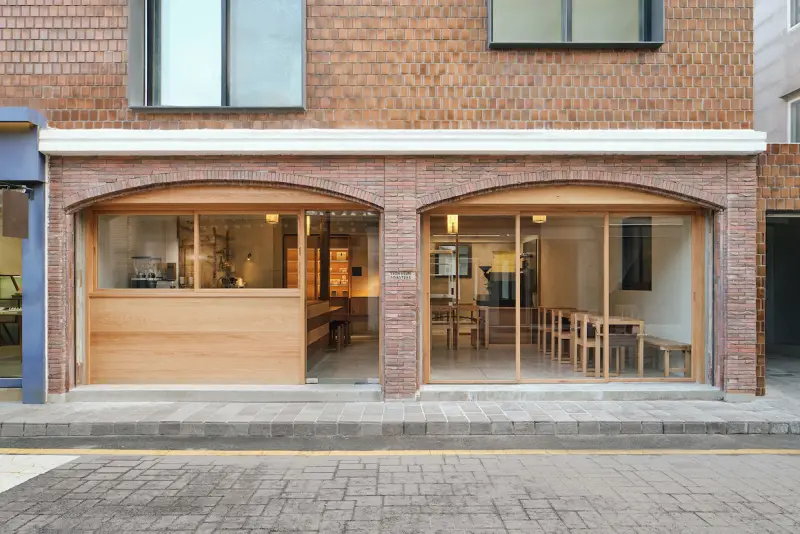
Designed by Sherpa, with Shin Yeon Ho and Mo Byeong Guk on the team, the cafe was completed in February 2025. Its material choices give the room a clear point of view without relying on a single decorative gesture. Instead, the designers connect building history, natural patterns and Korean craft through details that repeat across the floor, furniture, walls and ceiling.
A renovation that keeps the building’s past visible
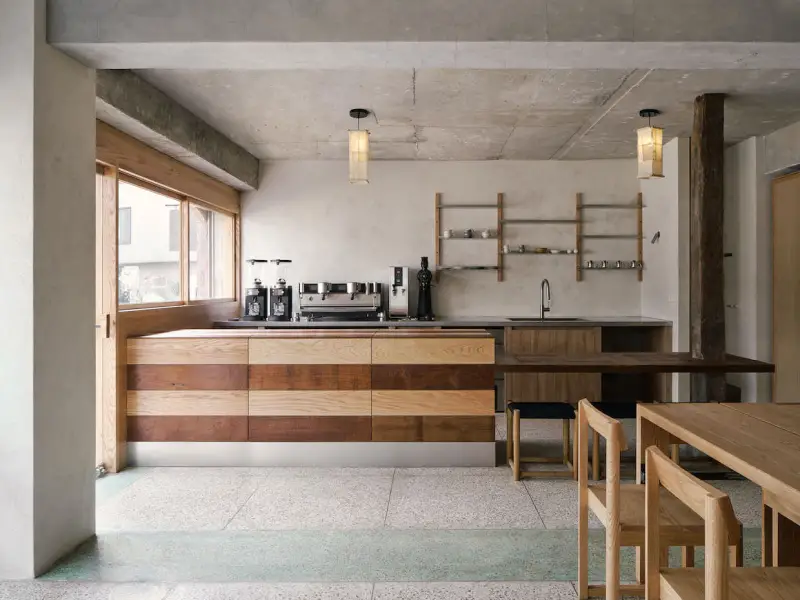
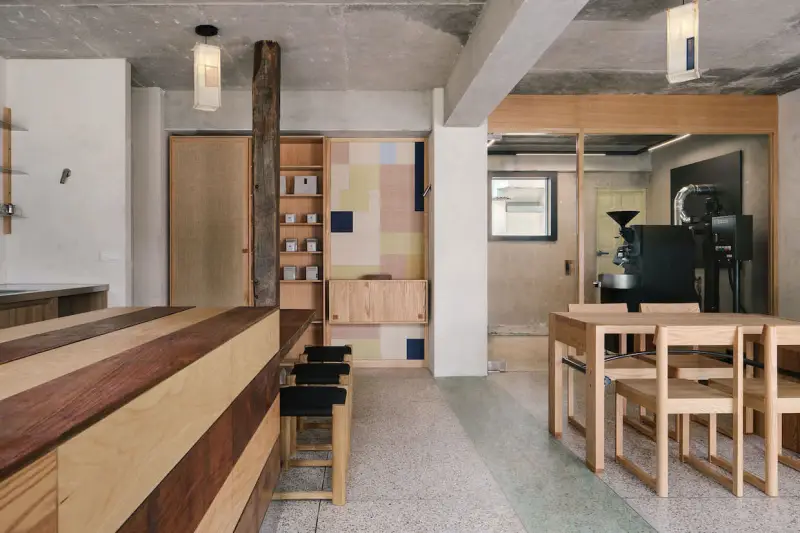
Rather than cover the existing building with a new visual scheme, Sherpa retained and restored parts of it. The original terrazzo floor was repaired, and windows and doors that had been concealed were uncovered and fitted with new glass. These decisions let the building’s earlier layers remain legible while giving the cafe a refreshed, usable interior.
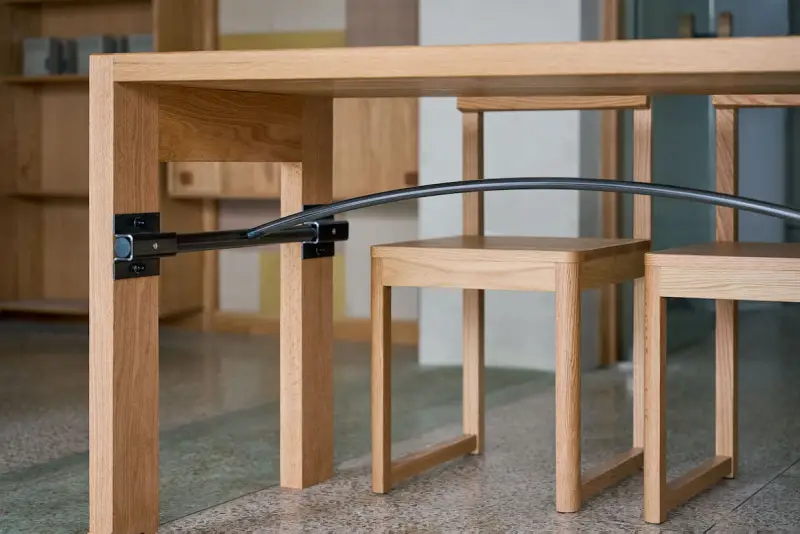
The approach matters in a compact space. Restored architectural features can carry visual character without demanding more floor area, while their history gives new finishes something to respond to. At Yeonheun, the arched forms of the original facade informed furniture shapes, linking the architecture to the objects inside. That connection helps the interior feel composed: the furniture echoes the building instead of competing with it.

The project draws on a line from travel writer Seol Jae-woo, who describes Seochon as having “the power to soothe and heal our weary hearts.” Sherpa’s design concept similarly treats the cafe as part of the neighborhood’s everyday life. Its aim is not to make age look polished away, but to let accumulated traces contribute to the room’s character.
Wood grain as a record of time
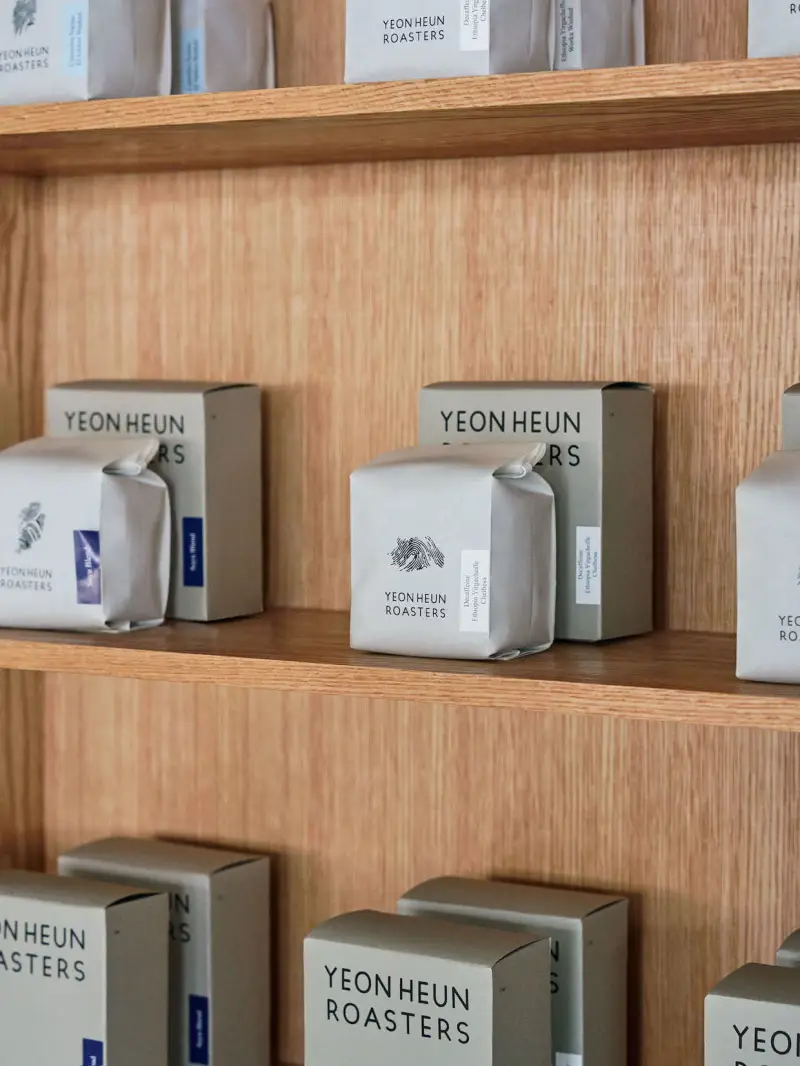
Reclaimed timber and oak carry the idea of time through the interior. The designers left growth rings and other natural markings visible, making each piece of wood read as material with its own history. Wood grain also connects to the project’s other visual references: fingerprints and ripple patterns. Similar forms appear in the cafe’s graphic motifs, carrying the theme beyond the structural materials.
That repetition is what gives the concept its coherence. A ripple is not only a shape applied to a surface; it becomes a way to link natural marks, human traces and the older building. The result can feel quietly layered rather than heavily themed, because the references arise from materials already present in the space.
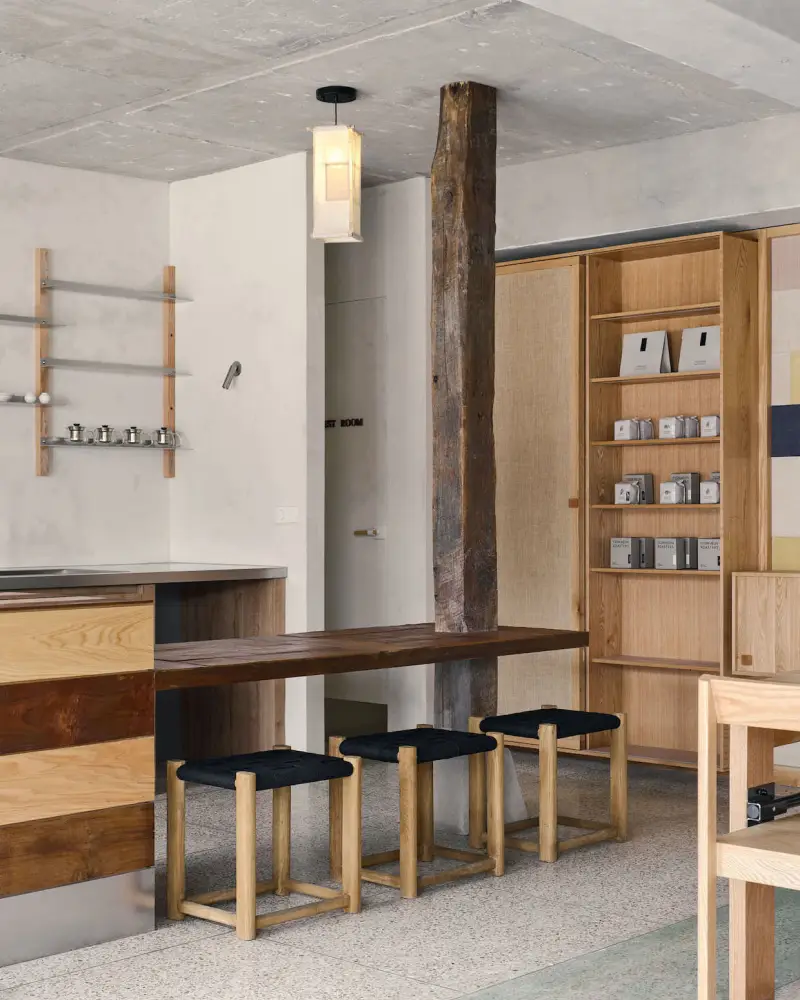

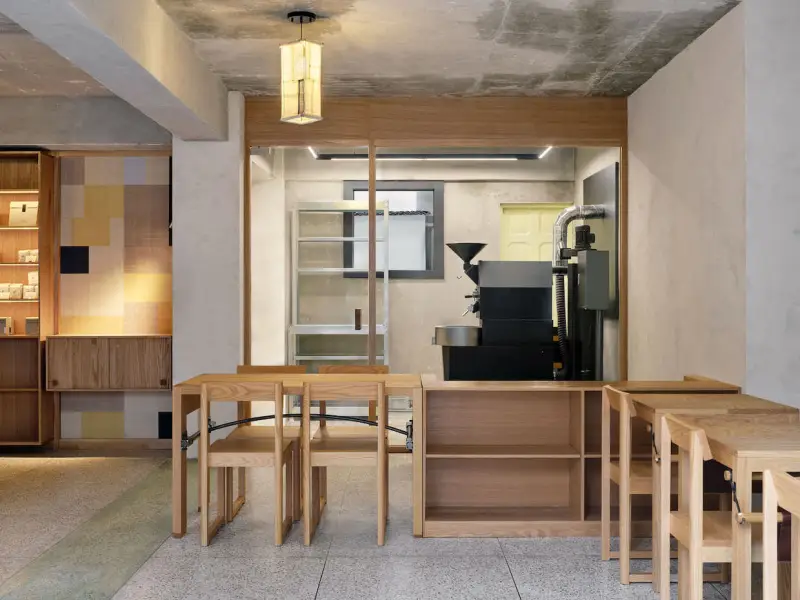
Selected furniture pieces use nakdong-beop, a traditional wood-burning technique. Burning the wood and finishing its cross-sections produces a contrast between charred surfaces and exposed grain. The method makes the material’s structure more prominent, while adding a darker finish that sits alongside the warmer timber elsewhere in the cafe.
Craft references bring warmth to the room
Reclaimed wooden columns rest on foundation stones, drawing on traditional Korean architecture. On the walls, pieces of jogakbo, the Korean patchwork tradition, add another handmade element. Ceiling lighting extends the room’s warm atmosphere overhead, so the design’s softer character is not confined to its walls and furniture.
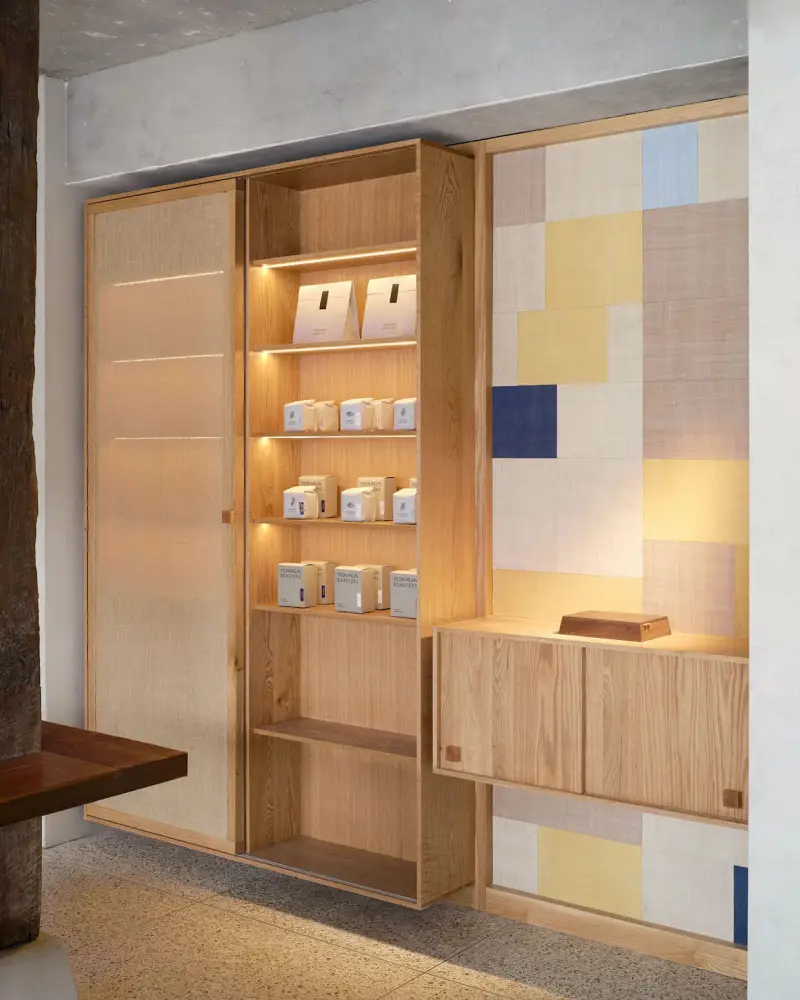
Sherpa describes the space as a welcoming sarangbang, a traditional reception room, for the alleys of Seochon. The reference gives the cafe a social role as well as a visual one: it is imagined as a place of warmth within the neighborhood. The designers connect that feeling to small, subtle details, suggesting that daily life takes its rhythm from repeated encounters with the ordinary surroundings.
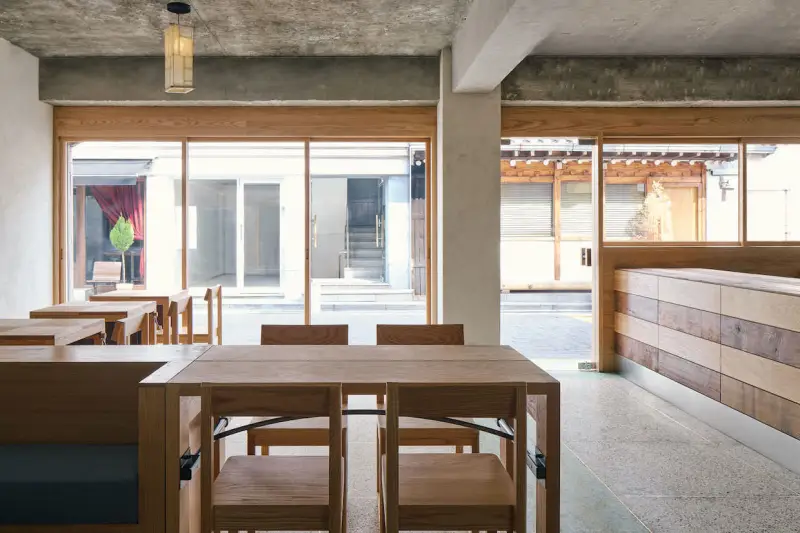
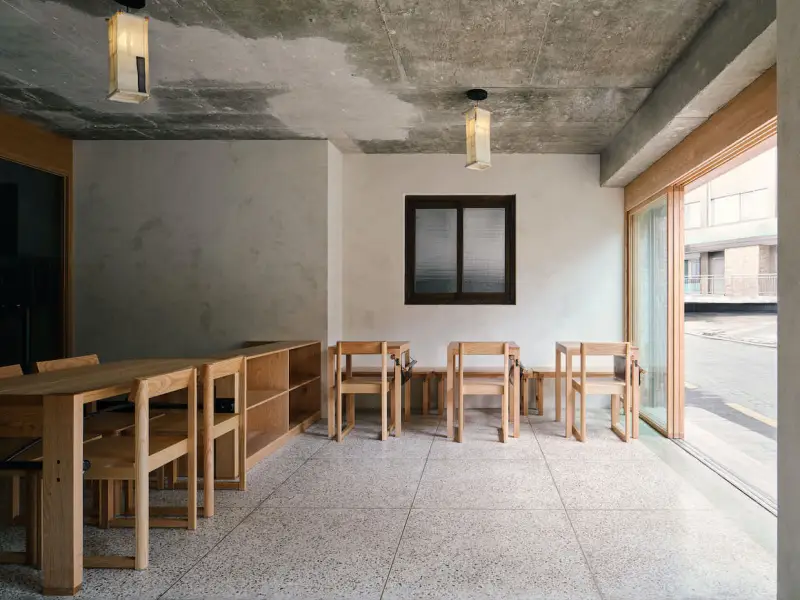
Yeonheun Roasters makes its strongest impression through the way its elements work together. Reused openings and terrazzo keep the building’s history present; wood, patchwork and lighting bring craft and warmth into the room; repeated patterns tie those choices to the idea of ripples. In a neighborhood setting, that layered approach gives the cafe a sense of place that can deepen with everyday use.