Maple Pecan Salmon with Dijon Glaze and Lemon Drizzle
- [email protected] (Ksenia Prints)
- 918 views
A crisp pecan and thyme topping meets sweet maple-Dijon glaze in this oven-baked salmon, with a 30-minute cure that helps keep the fish moist.
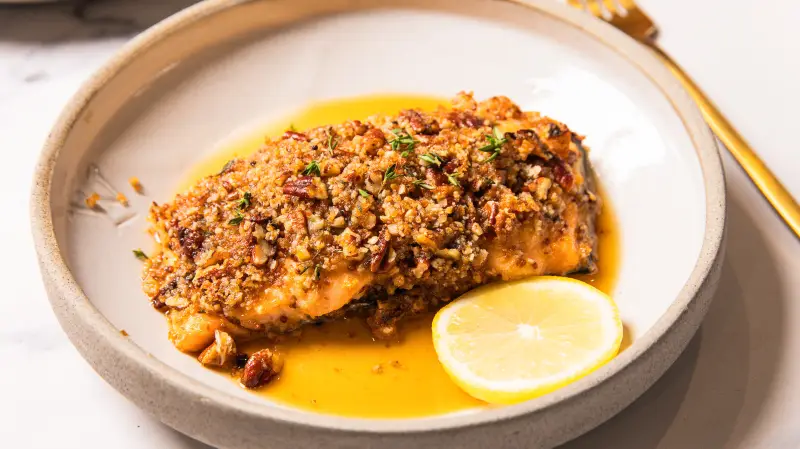
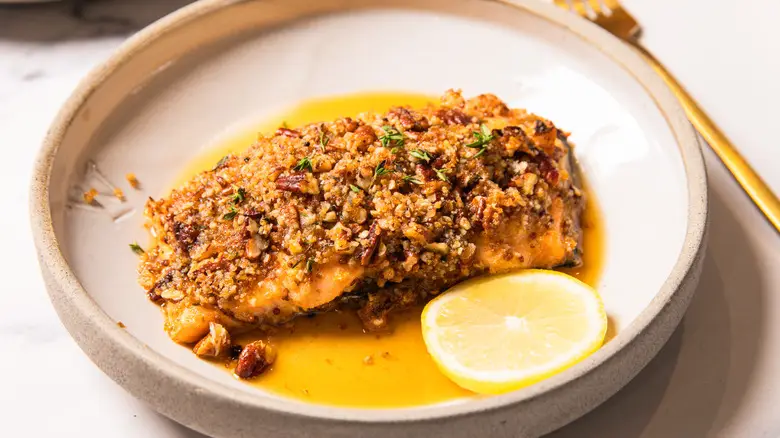
Maple pecan salmon gets its character from contrast: a sweet, tangy Dijon glaze under a buttery pecan and thyme crust, finished with a bright maple-lemon drizzle. A 30-minute salt cure helps the surface dry so the fish cooks neatly and stays moist inside. The dish takes 1 hour 5 minutes from start to finish, including that resting time, and serves four.
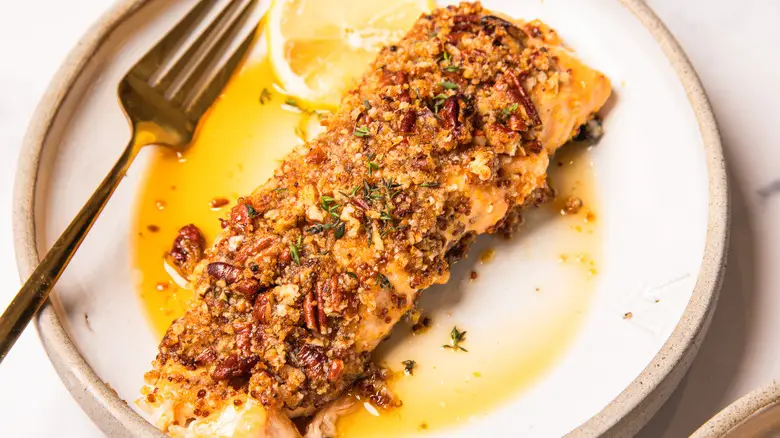
The method is simple, but two details make a difference: wipe away most of the salt after curing, and press the topping firmly onto the glazed fillets. If the pecans brown ahead of the fish, a loose foil tent gives them cover while baking continues.
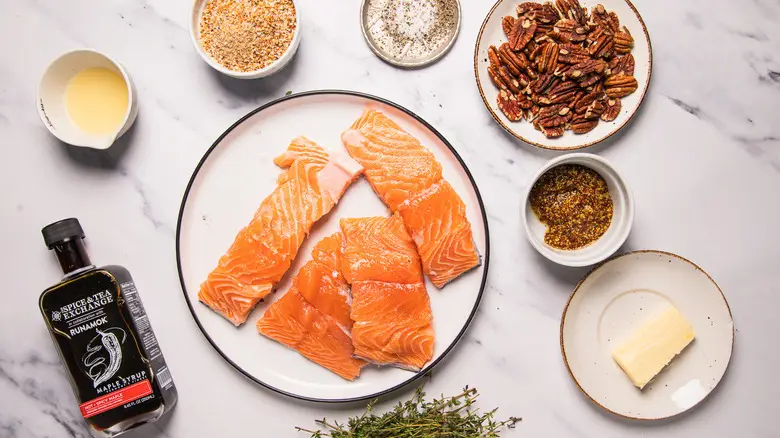
Ingredients for four servings
- 4 (6-ounce) salmon fillets, skin on
- 1 teaspoon kosher salt
- ½ teaspoon black pepper
- 1 tablespoon Dijon mustard
- 3 tablespoons maple syrup, divided
- 1 cup pecans, finely chopped
- 2 tablespoons plain breadcrumbs
- 2 tablespoons unsalted butter, melted
- 1 tablespoon fresh thyme leaves
- 1 tablespoon fresh lemon juice
Any maple syrup works. A hot-and-spicy variety adds a little heat alongside the sweetness, while plain syrup keeps the glaze mellow. Fresh thyme brings an herbal note to the nut crust; keep the pecans finely chopped so they form an even layer.
Cure the salmon and prepare the glaze
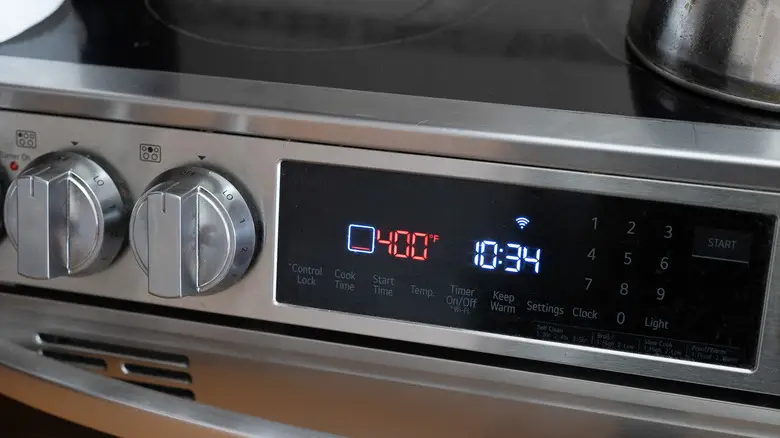
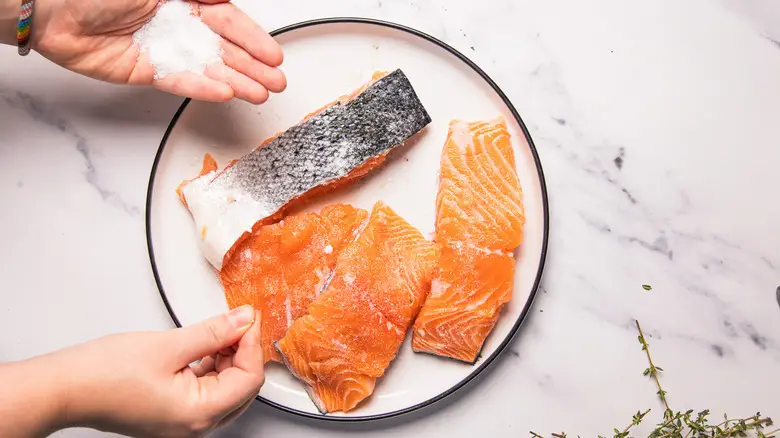
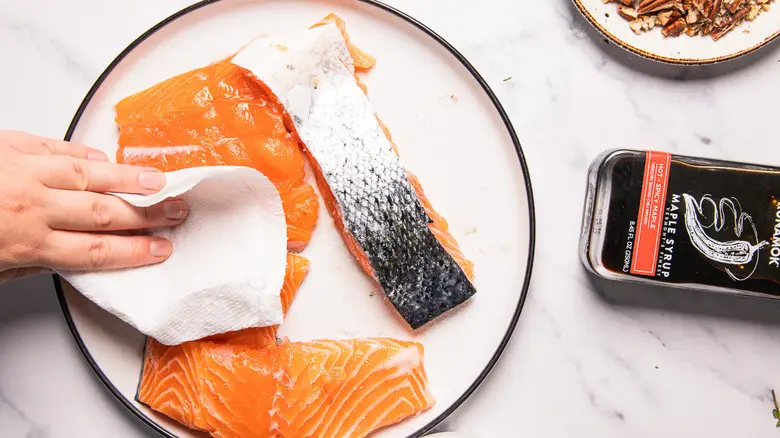
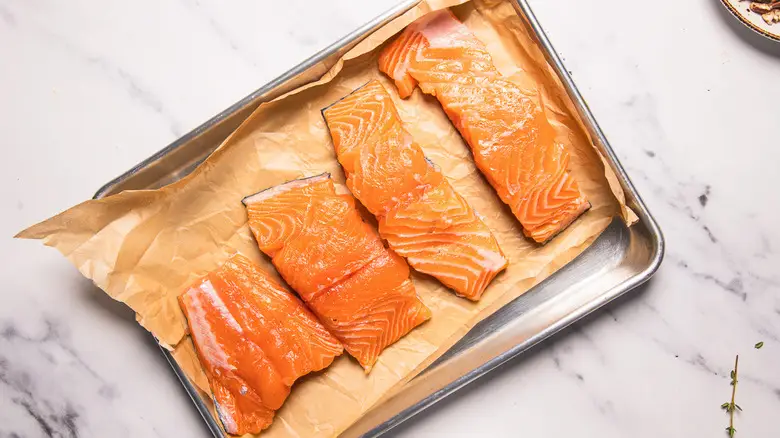
Heat the oven to 400 F and line a baking sheet with parchment paper. Pat the salmon dry, then season both sides with the kosher salt. Refrigerate the fillets for 30 minutes. This short cure draws moisture from the surface, helping it dry out while the fish retains moisture as it cooks.
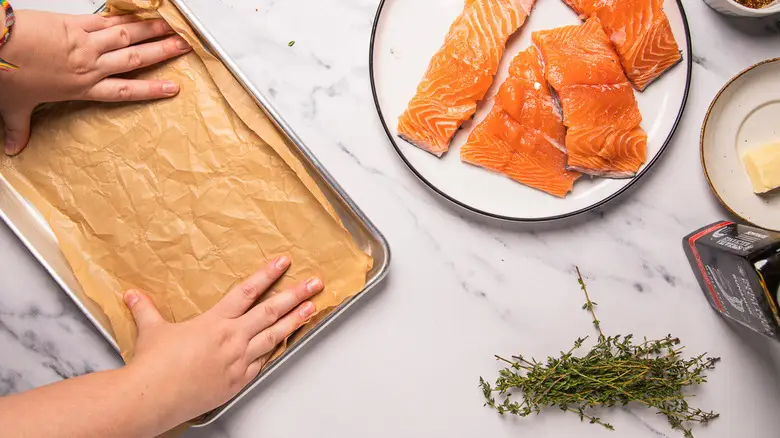
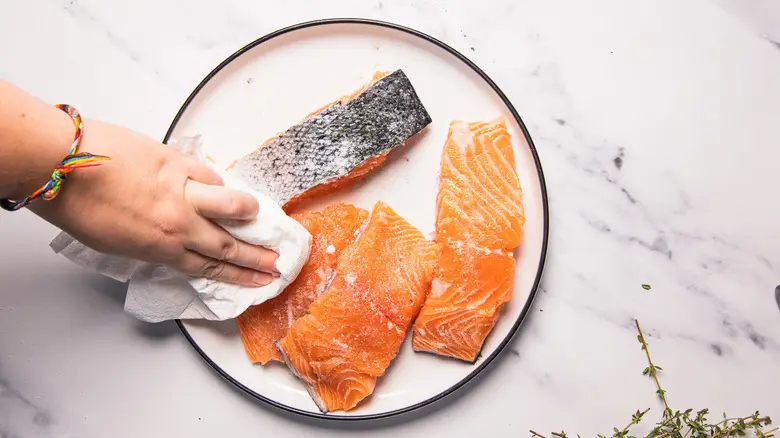
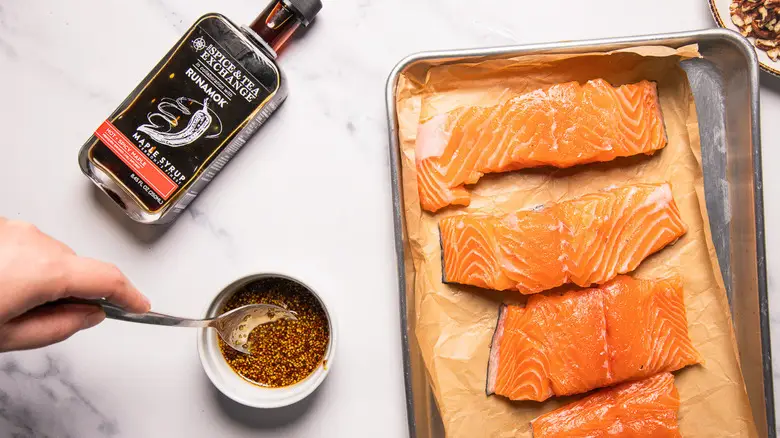
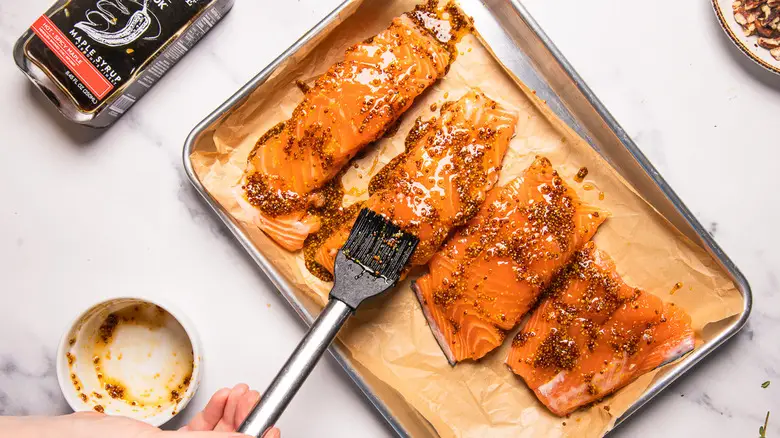
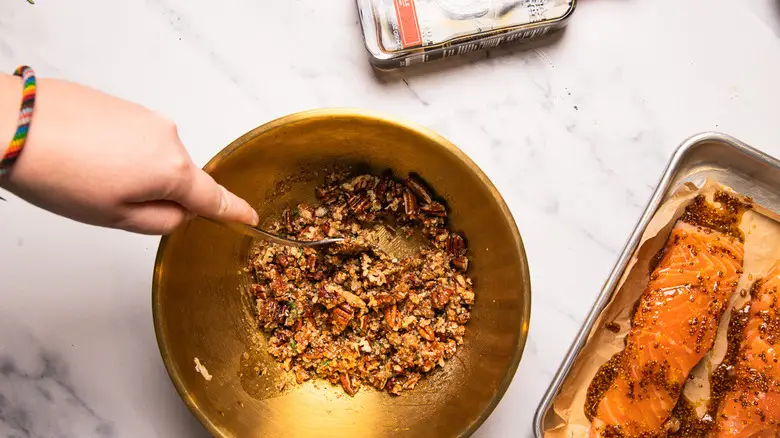
After curing, pat the fish dry again, wiping off most of the salt, and season with black pepper. Set the fillets skin-side down on the prepared baking sheet. In a small bowl, whisk the Dijon mustard with 2 tablespoons of maple syrup, then brush the mixture evenly over the tops of the fish.

Add the pecan crust and bake
Stir together the chopped pecans, breadcrumbs, melted butter and thyme. Distribute the mixture over the glazed fillets, pressing it firmly into place. That pressure helps the topping hold together instead of scattering as you serve the fish.
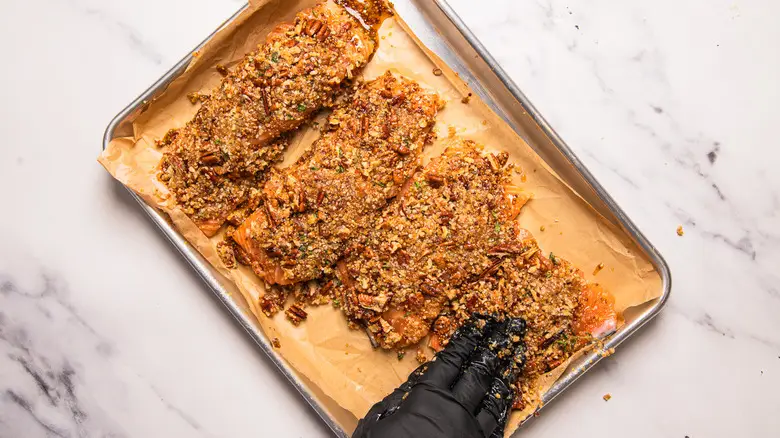
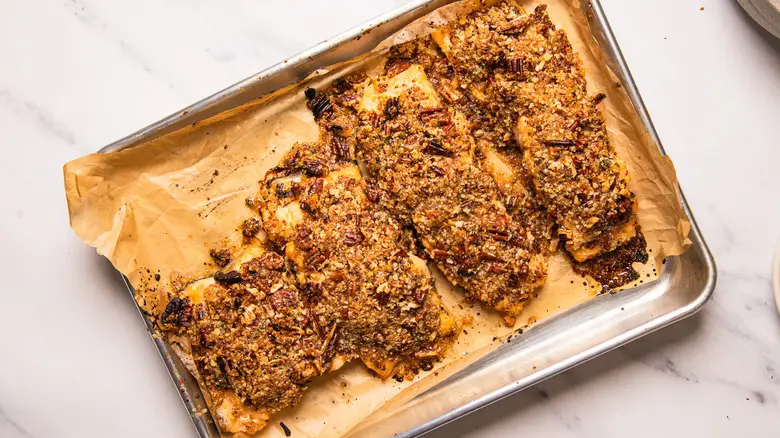
Bake for 15 to 18 minutes, until the salmon flakes easily with a fork and the crust is golden brown. Check the topping as it cooks: if it browns too quickly, tent the pan loosely with foil halfway through. The listed baking time is a guide, so use the fish’s texture as the final cue and avoid leaving it in the oven after it flakes.
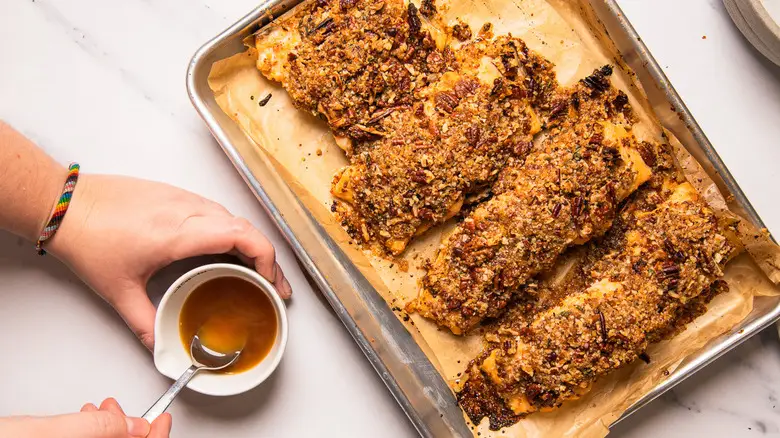
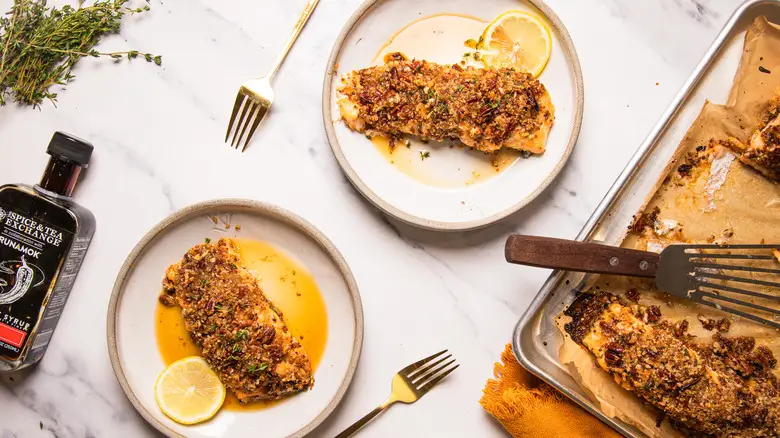
While the fish bakes, whisk the remaining 1 tablespoon maple syrup with the lemon juice. Drizzle it over the salmon just before serving. The citrus cuts through the rich butter and nuts, while the extra maple echoes the glaze.
Serving and useful variations
Serve the salmon with potatoes or vegetables for a weeknight meal, or bring it to the table as a more dressed-up main. Crispy fingerling potatoes, creamy mashed red potatoes, citrusy arugula salad, cucumber salad or French potato salad all make suitable companions.
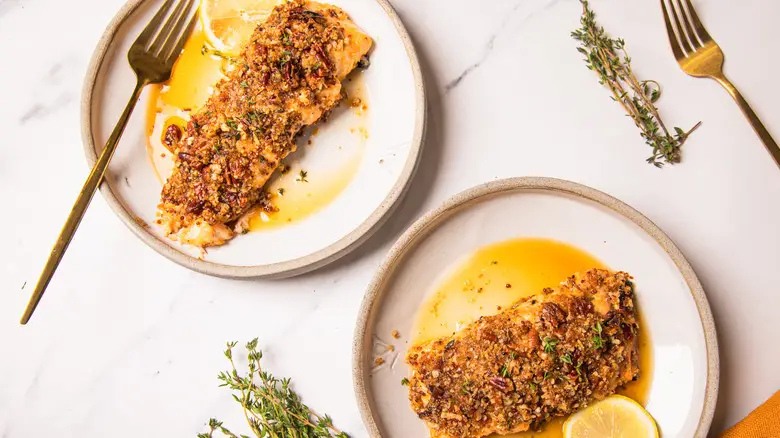
For a finer, denser topping, pulse the pecans and breadcrumbs in a food processor. Mix in 1 tablespoon olive oil, Dijon and thyme, then spread the paste over the fish. This version adheres more firmly and is especially useful if you’re adapting the cooking method. Walnuts can replace pecans; pistachios make a finer crust and pair well with a little honey mixed into the Dijon. Arctic char or trout can stand in for salmon, bringing their own flavor and texture.
Pan-frying option
For a stovetop finish, dry the salmon thoroughly first. Heat a pan over medium-high, add a neutral oil such as avocado or grapeseed, and cook the fillets skin-side down for about 5–6 minutes for a 1-inch-thick fillet. Apply the pecan crust, then transfer the pan to the oven and broil for two to three minutes. Keep the fish skin-side down throughout; flipping can disturb the topping, and the nuts can burn if they sit directly against the hot pan.
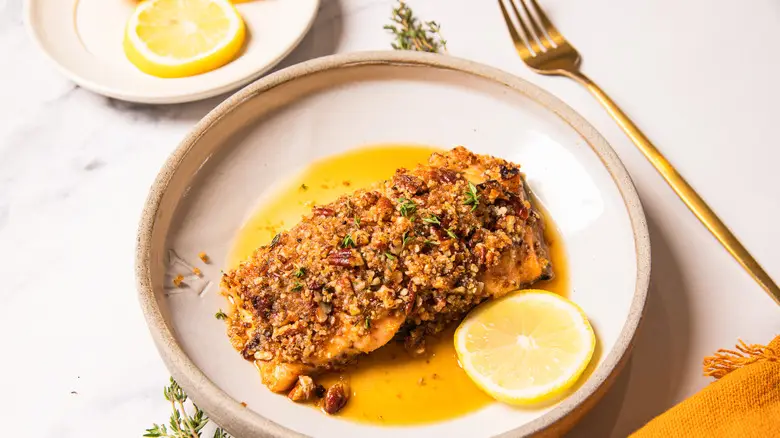
Whether baked or finished under the broiler, the best cue is tender fish with a golden crust. Bring the lemon-maple drizzle to the table as soon as the salmon is ready, while the topping is still crisp.