Sheet Pan Steak Frites With Café Butter and Lemon Aioli
- [email protected] (Ksenia Prints)
- 994 views
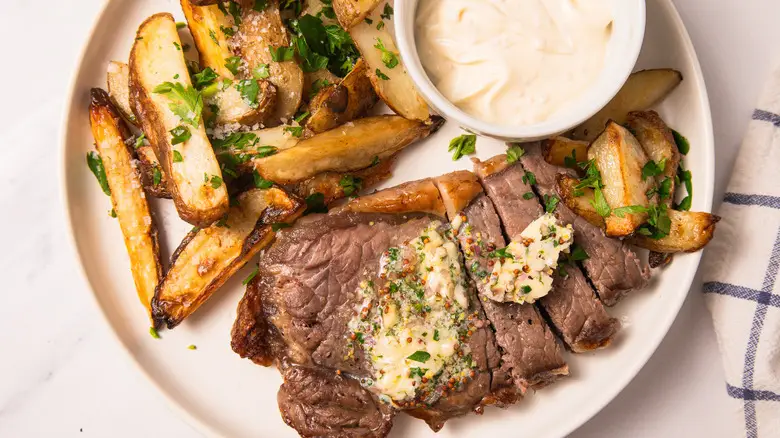
Crisp duck-fat fries, tender New York strip and savory café butter make this sheet pan steak frites a satisfying dinner for four.
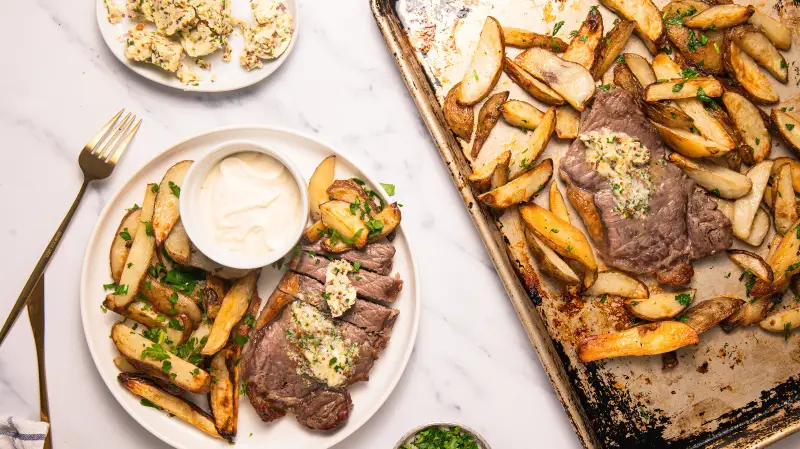
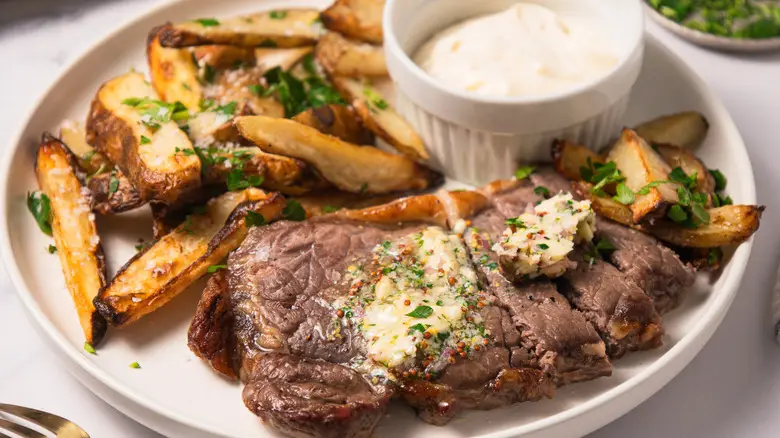
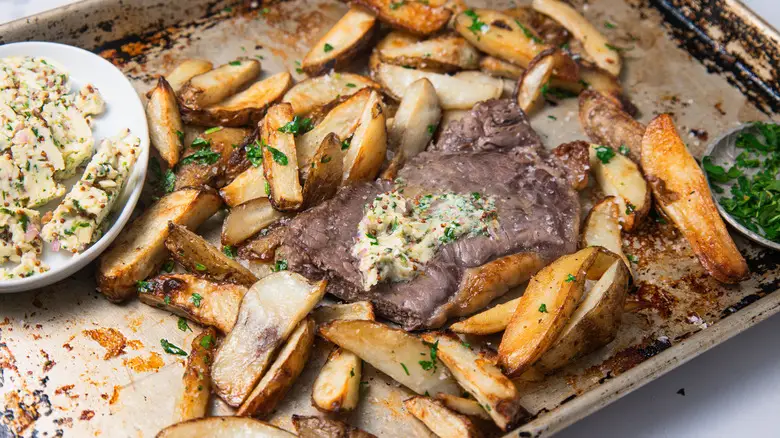
Restaurant-style steak frites comes together on one sheet pan, with a smart sequence that gives the fries time to crisp before the steaks join them for their final minutes in the oven. Duck fat adds a rich, savory edge to the potatoes; a chilled café butter melts over the rested steak; and lemon aioli brings a bright, garlicky finish. The method is practical for a weeknight, but the details make it feel like a meal worth lingering over.
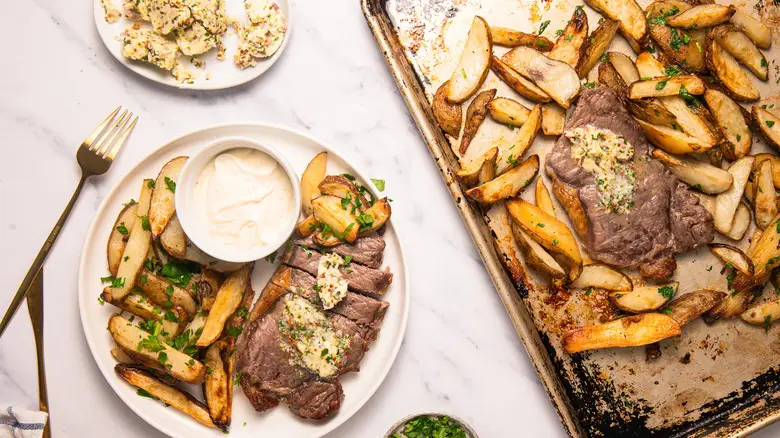
This recipe serves four and takes about 1 hour and 45 minutes from start to finish, including 1 hour and 8 minutes of prep and 40 minutes of cooking. The key is timing: soak and thoroughly dry the potatoes, roast them on a preheated baking sheet, then make space for the steaks. While the meat rests, a brief broil deepens the fries’ color and crispness.
Ingredients
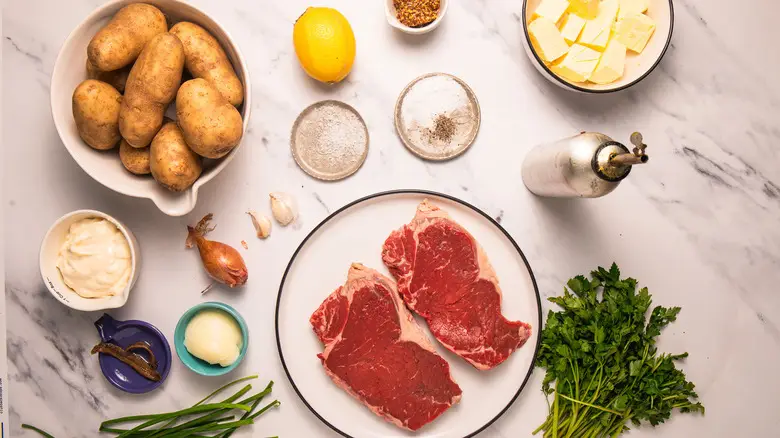
For the café butter: 8 tablespoons unsalted butter, softened; 1 small shallot, minced; 1 clove garlic, grated; 2 anchovy fillets, minced; 1 tablespoon fresh parsley, finely chopped; 1 tablespoon fresh chives, finely chopped; 1 teaspoon Dijon mustard; 1 teaspoon fresh lemon juice; and ¼ teaspoon kosher salt.
For the lemon aioli: ½ cup mayonnaise; 1 clove garlic, grated; 1 tablespoon fresh lemon juice; and ¼ teaspoon kosher salt.
For the frites and steak: 2 pounds russet potatoes, cut into ½-inch sticks; 2 New York strip steaks, each 1 pound and 1½ inches thick; 3 teaspoons kosher salt, divided; 1 teaspoon black pepper; 3 tablespoons melted duck fat or olive oil; ½ teaspoon flaky sea salt; 1 tablespoon neutral oil; and 2 tablespoons fresh parsley leaves, roughly chopped.
Make the butter and aioli first
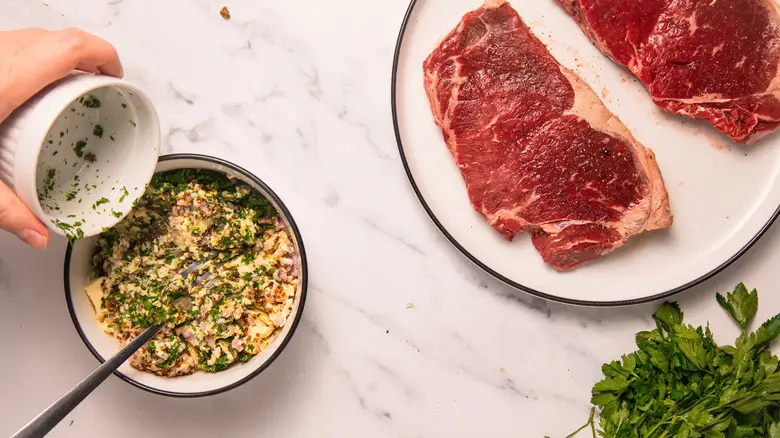
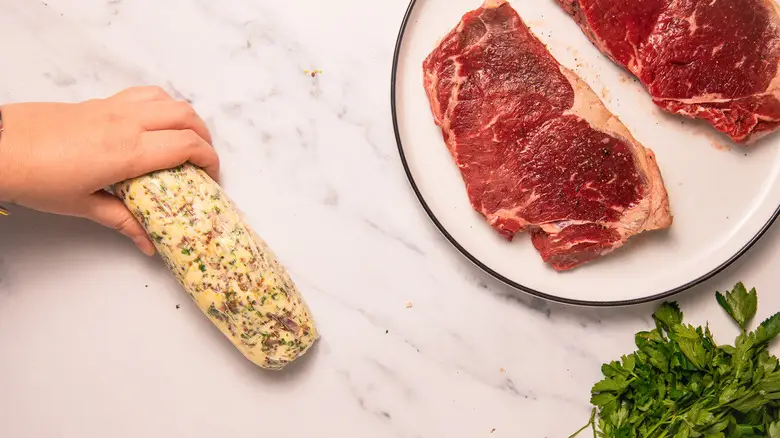
In a bowl, mash the softened butter with the shallot, grated garlic, anchovies, 1 tablespoon finely chopped parsley, chives, Dijon, lemon juice and ¼ teaspoon kosher salt. Work the mixture until the ingredients are evenly distributed. Spoon it onto plastic wrap, shape it into a log, twist the ends closed and refrigerate until firm. Chilling helps the butter hold its shape and melt gradually when it meets the hot steak.
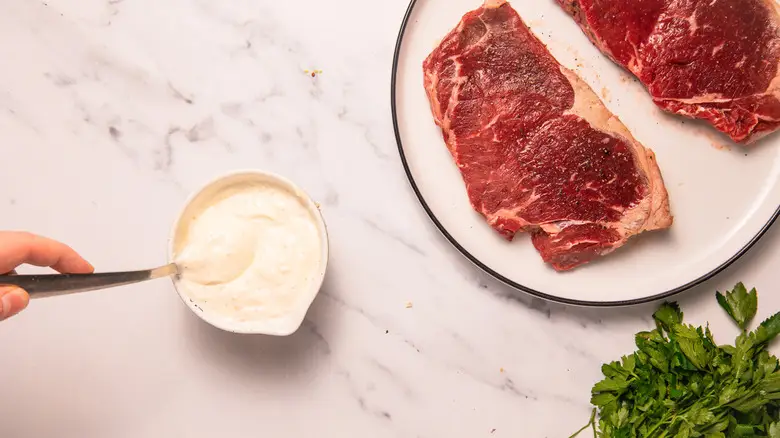
For the aioli, whisk together the mayonnaise, grated garlic, lemon juice and ¼ teaspoon kosher salt in a small bowl. Refrigerate it until serving. These two condiments do different jobs: the butter brings savory depth and richness to the meat, while the lemon aioli cuts through the crisp, fatty fries.
Prepare the potatoes and steaks
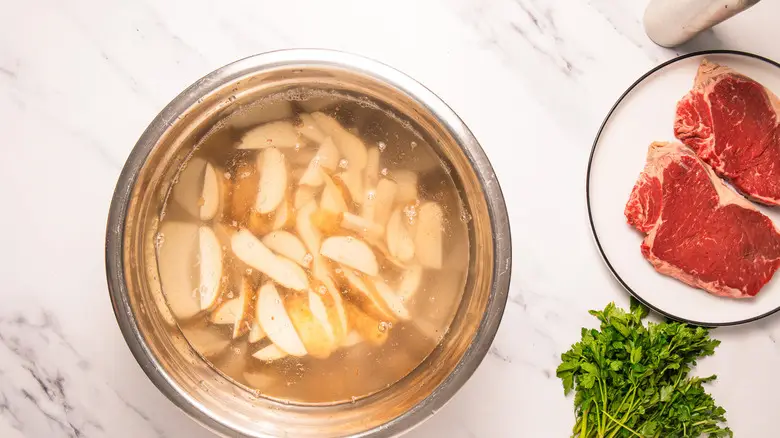
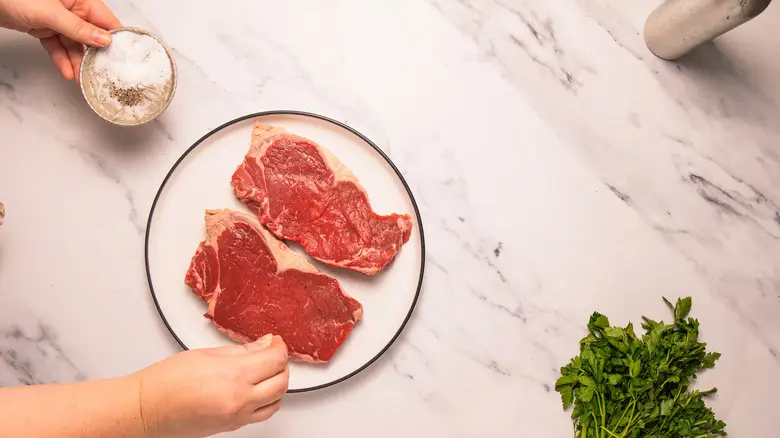
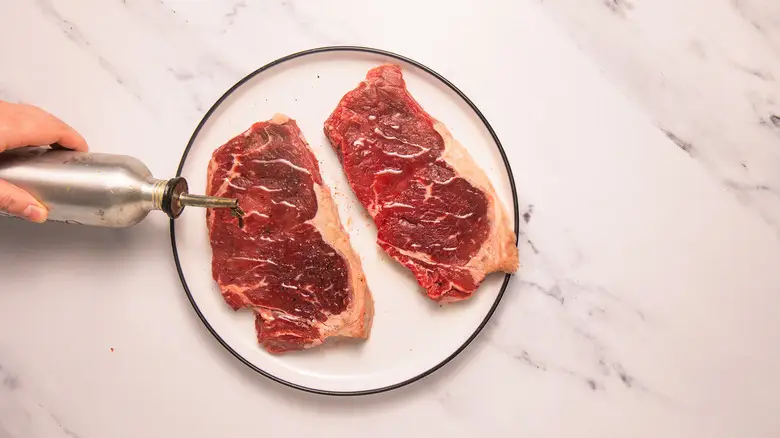
Put the potato sticks in a large bowl of cold water for 30 minutes to remove surface starch. During the soak, season the steaks on all sides with 2 teaspoons kosher salt and the black pepper. Let them sit at room temperature while the potatoes soak. Bringing the steaks out of the refrigerator ahead of cooking helps them cook more evenly.
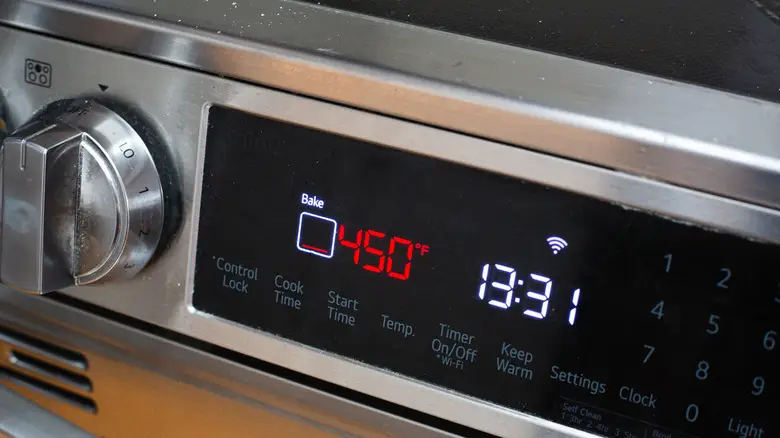
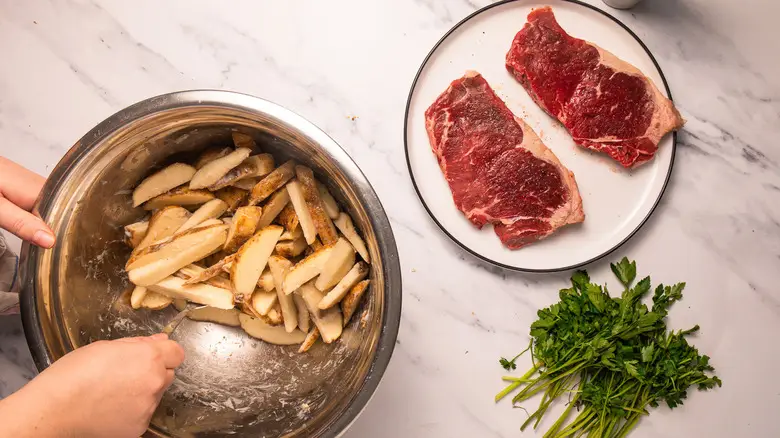
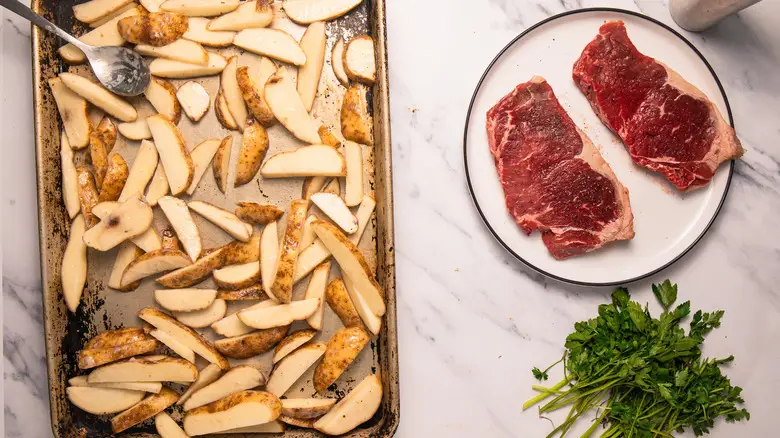
Set a rimmed baking sheet on the lower oven rack and heat the oven to 450 F. Drain the potatoes and dry them thoroughly with kitchen towels; moisture on the surface works against browning. Toss the dry sticks with the melted duck fat and the remaining 1 teaspoon kosher salt. Olive oil can replace the duck fat if needed, though duck fat is the recipe’s richer, more distinctive choice.
Roast the fries, then add the steak
Carefully remove the hot baking sheet from the oven and arrange the potatoes in a single layer, leaving space between the sticks. Give them room so they roast rather than crowd together. Return the pan to the oven and roast for 20 minutes, until the undersides are golden.
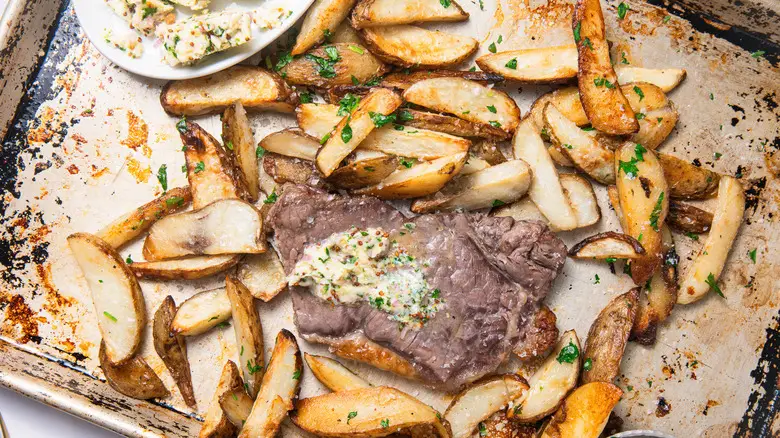
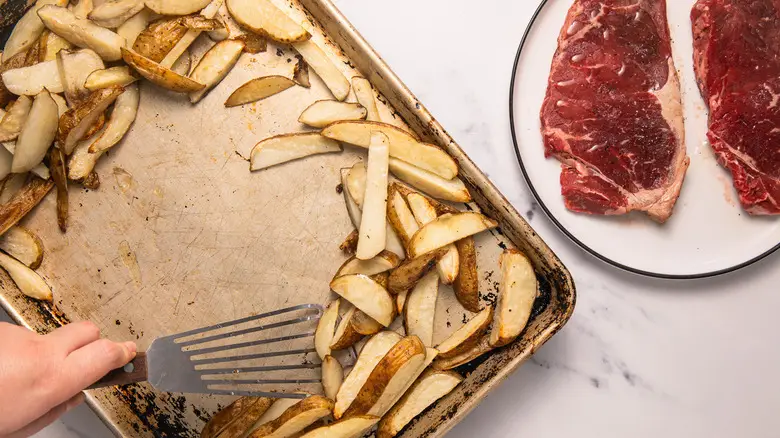
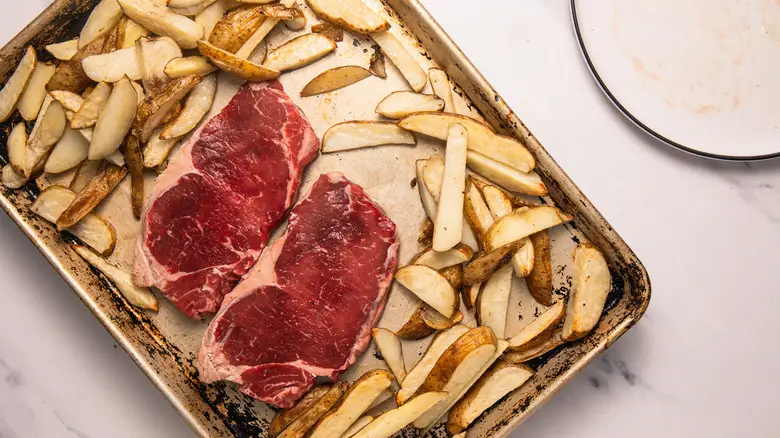
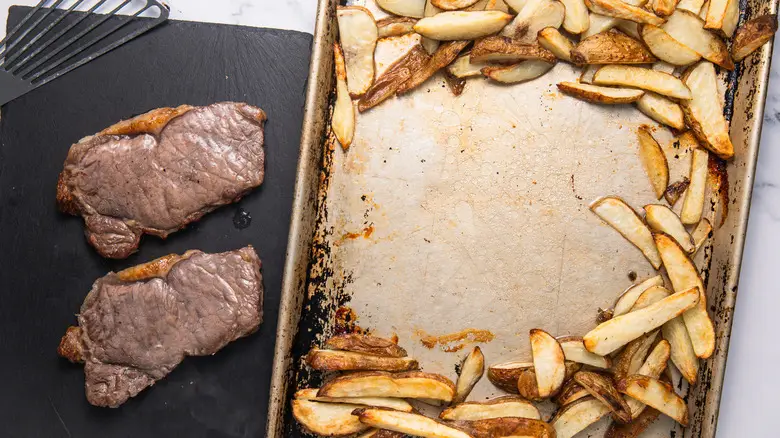
While the potatoes cook, pat the steaks dry and rub them with the neutral oil. After the fries have roasted for 20 minutes, take out the sheet pan and flip the potatoes. Push them toward the edges, leaving the center clear. Set the steaks in the middle of the pan, then return it to the oven.
Roast the steaks for 10 to 12 minutes. For medium-rare, use a thermometer in the thickest part of each steak, away from the fat cap, and take the meat out when it reads 125 F. The temperature should rise to 130 F as the steak rests. If you prefer medium, remove the steaks at 130 to 135 F; they should reach about 140 F during the rest.
A thermometer gives a more dependable reading than cutting into the meat. Slicing before the steak is done releases juices and can make the center look rarer than it is. Oven timing can also vary, so the temperature reading matters more than the clock alone. If your oven tends to run hot or cool, an oven thermometer can help you understand its actual temperature.
Rest, crisp and serve
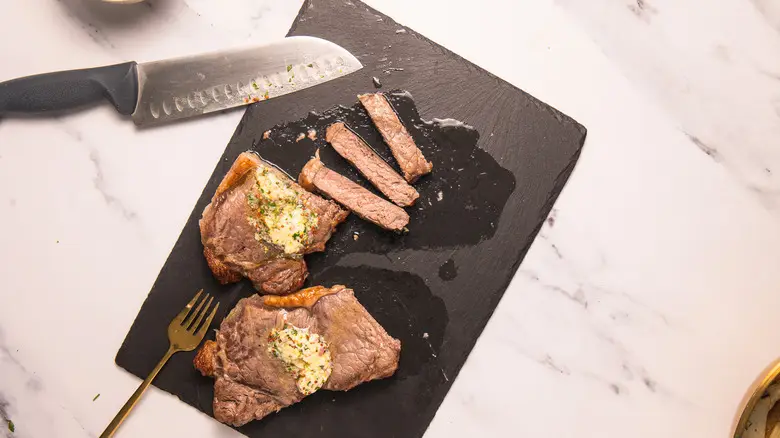
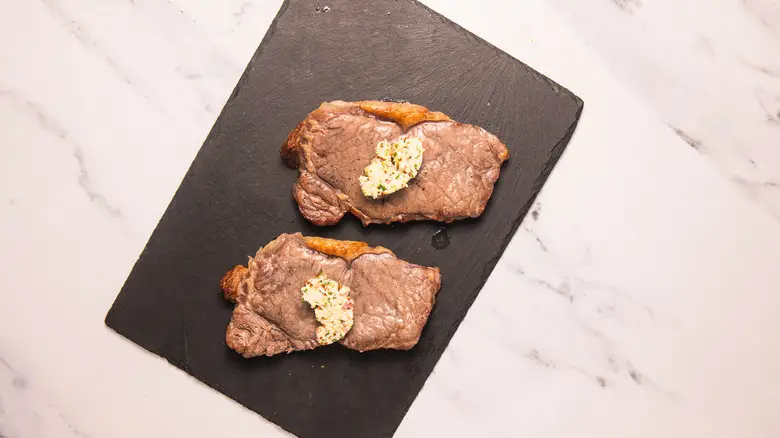
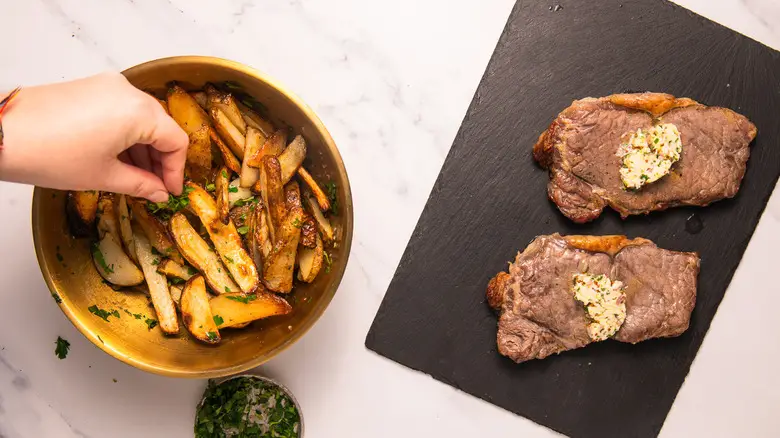
Transfer the steaks to a cutting board and place 2 tablespoons café butter on each. Rest them for 10 minutes. Meanwhile, return the fries to the oven and broil for 2 to 3 minutes, watching closely, until deeply golden and crisp. Broilers can brown food quickly, so stay nearby. Toss the finished fries with the flaky sea salt and 2 tablespoons roughly chopped parsley.
Slice the steaks against the grain for a more tender bite. Arrange the steak and fries on a platter, add a slice of the remaining café butter to each steak and serve with the chilled lemon aioli. A fresh salad or a green vegetable makes a natural accompaniment to the rich steak and potatoes.
Why café butter belongs with steak
This recipe’s café butter is a compound butter: softened butter blended with aromatics, herbs and seasonings, then chilled in a log. Its flavor takes loose inspiration from Café de Paris butter, made famous by a Geneva restaurant in the mid-20th century. It also draws on the French tradition of beurre maître d’hôtel, a classic mixture of butter, parsley and lemon served with steak in brasseries.
The anchovies, shallot, garlic and Dijon give this version a more pungent, savory character. If anchovies aren’t to your taste, leave them out for a milder butter. Other compound butters can stand in, too: parsley and garlic keep the flavor familiar, blue cheese adds a funkier note, and tarragon with shallots makes an aromatic alternative. Whichever blend you choose, make it ahead and chill it until firm so it softens slowly over the steak.