Al Rawabi Turns Farm Waste Into Biogas as It Expands UAE Food Production
- Pearly Neo
- 447 views
Al Rawabi processes 200 tons of organic waste daily into biomethane as it grows poultry and targets regional markets.
A circular system for a growing food business
Al Rawabi’s expansion into meat and poultry brings a practical question into focus: how can a desert-based agribusiness grow while making better use of the materials its operations already produce? The UAE company is building its answer around circularity, turning organic waste into biomethane and using solar power to support farm operations.
The business is best known for dairy and juice, where it is the UAE’s largest seller in both categories. Its dairy farms sit within one kilometre of its factories, a layout Group CEO Mazen Al Refae says helps the company deliver fresh products. The company has also expanded into poultry with an integrated operation that includes breeders, broiler farms, slaughterhouses and processing facilities. Those facilities make products such as hot dogs and nuggets.
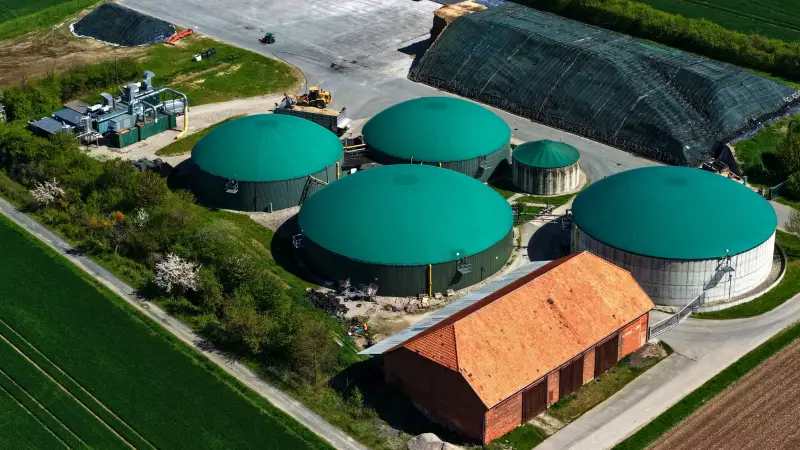
As the business grows across more parts of food production, waste and energy become linked operational concerns. Al Rawabi’s approach is to put some of its organic leftovers to work: a biogas plant processes about 200 tons of material each day, including livestock manure, expired milk and juice, and other agricultural residues. The plant converts that feedstock into biomethane, which the company describes as a renewable alternative to fossil fuel.
Waste becomes an energy input
The value of the system lies in connecting two parts of the operation that are often treated separately. Manure and unsold or expired products require handling; the biogas plant takes in those materials and produces fuel. That gives Al Rawabi a way to direct agricultural waste back into production as an energy resource, supporting the company’s aim of greater circularity.
Al Rawabi estimates that the plant reduces its carbon footprint by about 1,500 tons a year. The figure is the company’s estimate, and the source does not specify how it was calculated. Still, the scale of the daily input makes the plant a substantial part of its sustainability effort: 200 tons of organic material is processed each day, rather than treated as a separate waste stream.
The company also operates a solar power plant with a capacity of one megawatt. It generates between 1.4 million and 1.7 million kilowatt-hours of electricity annually, according to the figures provided by Al Rawabi. That electricity supports several farm operations and helps reduce the company’s reliance on conventional electricity sources.
Biomethane and solar power play different roles in the system. The solar plant generates electricity, while the biogas facility converts organic residues into fuel. Together, they give the company two ways to draw on resources available within its own operations. For an agribusiness with livestock, food processing and farm infrastructure, the connection between waste handling and energy supply can be as important to day-to-day production as a new product line.
Expansion brings food production into focus
Al Rawabi’s growth strategy stretches beyond dairy and juice. Its poultry operation takes the company through multiple stages of production, from breeding and broiler farming to slaughter and further processing. That structure gives it more direct involvement in how poultry products are made and creates room to develop a wider range of products.
For the coming decade, Al Refae says the company’s main direction is to help secure food for the Middle East from a UAE base. The company is also looking at regional markets, with Africa, Iraq, Lebanon and Jordan among its stated targets. Its existing focus remains on Gulf markets, while those additional destinations point to a wider regional reach.
Research and development is part of that longer-range plan. Al Refae says Al Rawabi wants to establish an R&D development base at home, with technology it can export internationally. The company’s stated case is that the UAE already has the infrastructure and capabilities needed to support that work; building a structured research base would let it develop technology locally and share it more widely.
That ambition links the company’s operating model with its growth plans. A local base for food production, processing and research could support regional supply while giving Al Rawabi knowledge and technology to take beyond its home market. The biogas plant fits into the same picture: it turns a by-product of production into an input for the business, while solar generation supplies electricity to farm operations. As the company expands, those systems will show how much of its growth can be supported by resources and capabilities already in place.