Juicy Stuffed Roast Turkey With Garlic Wine Butter and Pan Gravy
- Karina Carrel
- 681 views
Warm, lightly packed stuffing and garlic wine butter help this roast turkey stay tender, with crisp skin and quick pan gravy.
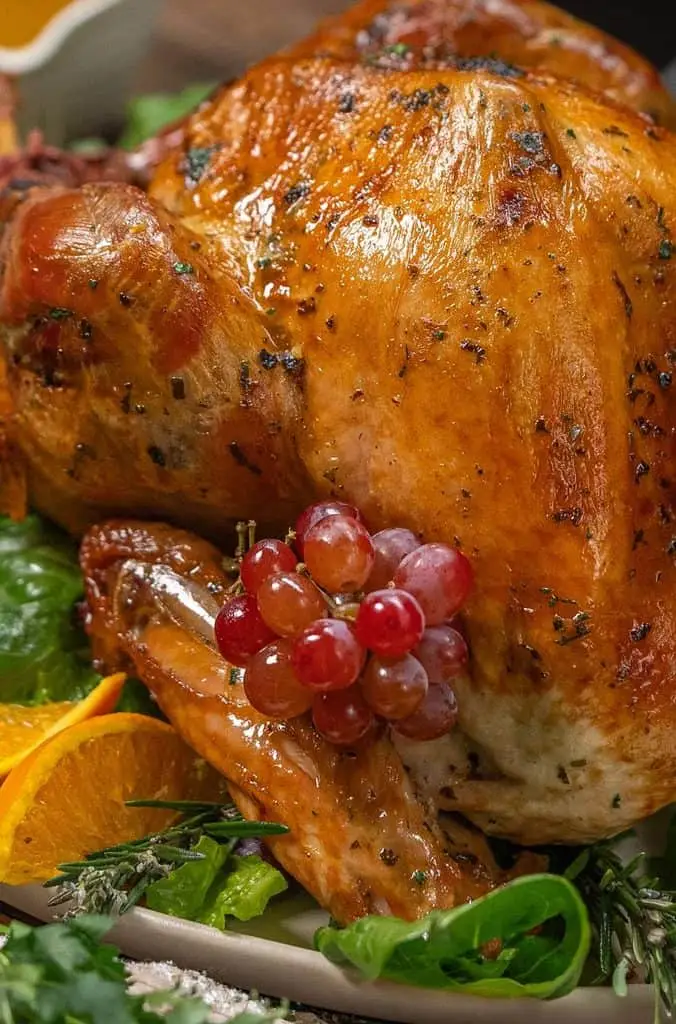
A stuffed turkey’s biggest challenge is getting the center of the filling hot without drying out the breast. This method tackles that by starting with warm, loosely packed stuffing, spreading garlic herb butter beneath the skin, and covering the bird for most of the roast. The result is tender meat, savory stuffing, crisp golden skin and pan juices ready to become gravy.
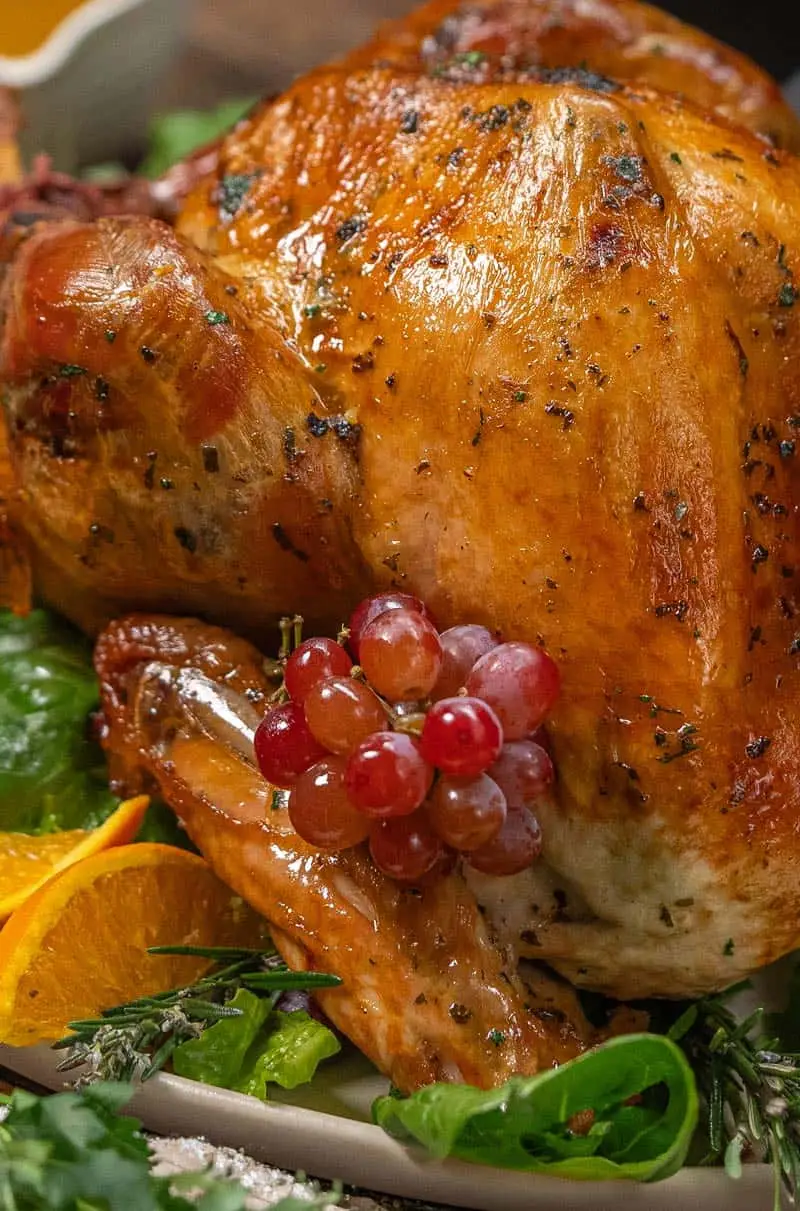
The quantities and timing below are for an 11-pound (5 kg) turkey, which serves 10. Plan on 30 minutes of prep and 3 hours 15 minutes of cooking, plus at least 10 minutes for resting. Oven performance varies, so use a thermometer to check the turkey and the center of the stuffing before serving.
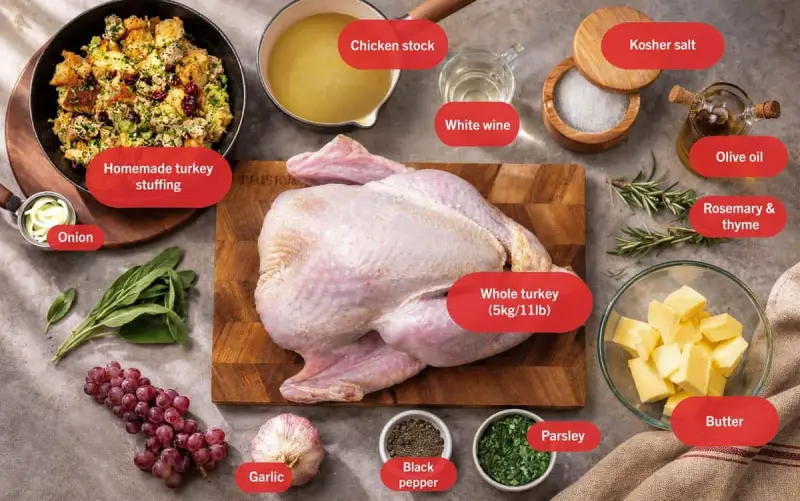
Ingredients
Garlic butter paste
- ⅔ cup unsalted butter
- 1 medium head garlic, minced (4 large cloves)
- ¼ cup white wine
- ½ cup chopped fresh parsley
- Extra thyme, if desired
- Salt to taste
Turkey
- 1 turkey, 11 pounds
- 1 tsp black pepper
- 1 tbsp kosher salt or sea salt
- ½ tbsp olive oil, to drizzle over the skin
- About 2 cups prepared stuffing
For the roasting pan and basting
- 4 large garlic cloves, chopped
- 1 small yellow onion, sliced, optional
- 4 rosemary sprigs
- ¼ cup butter for the pan
- ¼ cup white wine
- 1 cup chicken stock
For the butter paste, the instructions also describe warming about 100 g of butter to make it easier to mix. The basting mixture uses warm chicken stock and 50 g butter melted with white wine. Keep some extra butter on hand to grease the underside of the foil so it won’t stick to the skin.
Why the stuffing stays tender
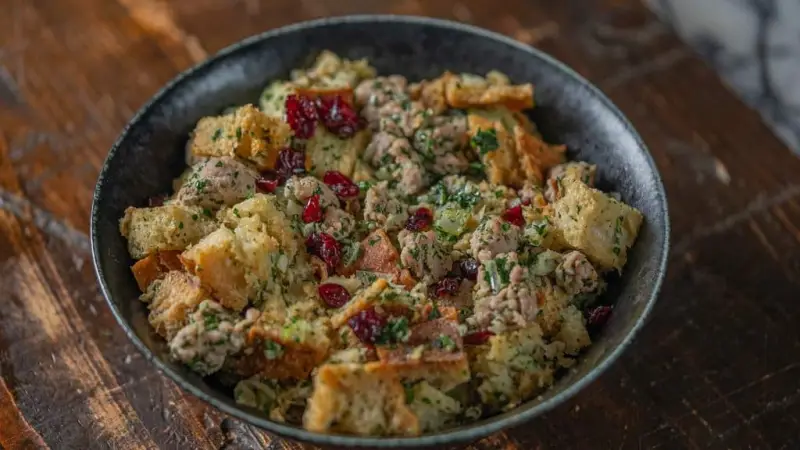
Cold stuffing can slow the heat reaching the center of a stuffed bird, leaving the breast to roast for longer than it needs. Cook the stuffing on the stovetop for 10 minutes first, then spoon it into the turkey while warm. That head start helps the filling cook at a pace closer to the surrounding meat.
Use about 2 cups for an 11-pound turkey and leave it loose. Bread expands as it cooks, and tightly packed filling can become dense while obstructing heat. Put any extra stuffing in a baking dish and cook it separately. You can use a favorite sausage stuffing or a vegetarian herb version.
Prepare the bird and butter
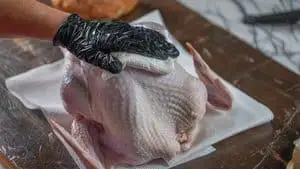
Remove the neck and giblets from the cavity; they can be boiled for stock if you like. The recipe calls for washing the bird inside and out, then drying it very thoroughly with paper towels, including inside the cavity. Dry skin roasts; wet skin steams. If the skin has a tear, hold it together with toothpicks.
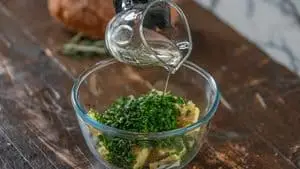
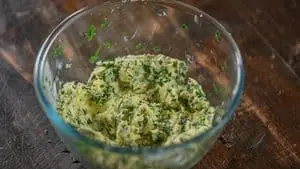
Warm the butter just enough to soften it. Mash it with the minced garlic, parsley, salt, pepper and ¼ cup white wine until smooth. If liquid separates from the mixture, drain off the excess so the paste is easy to spread. Thyme can be added, and fresh thyme may stand in for rosemary in the pan.
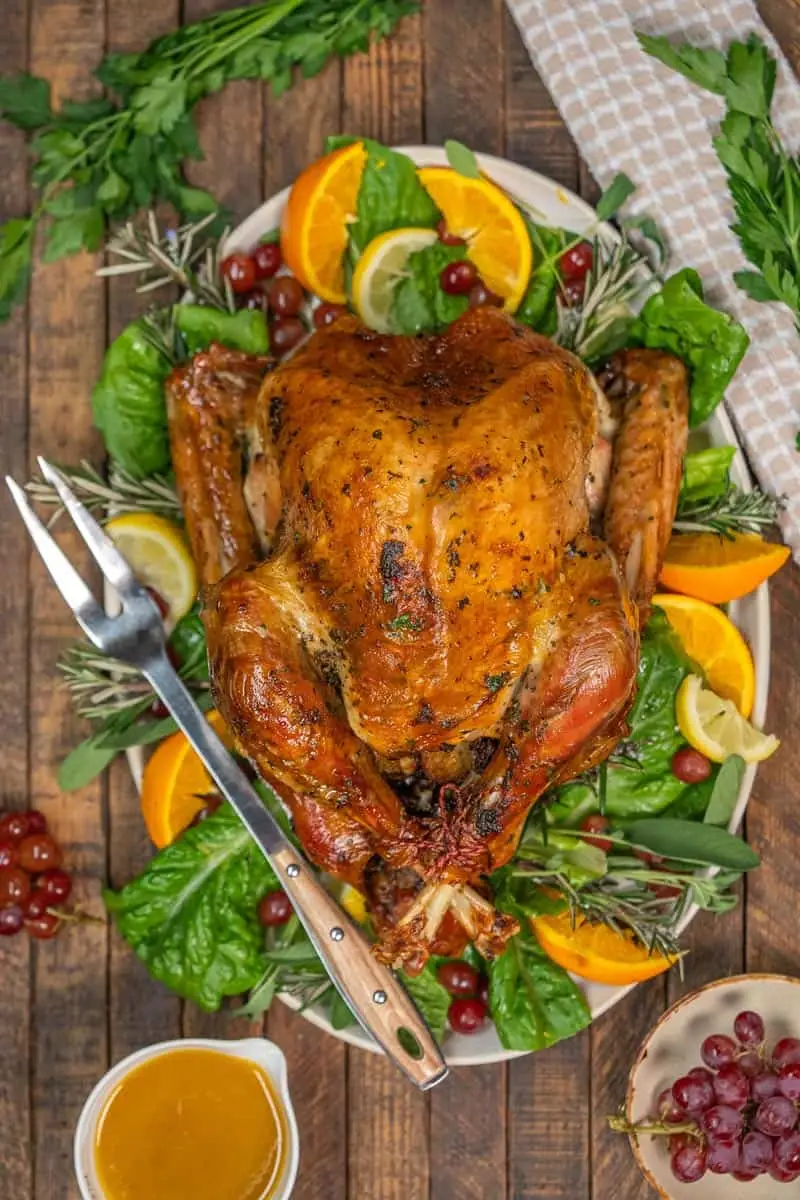
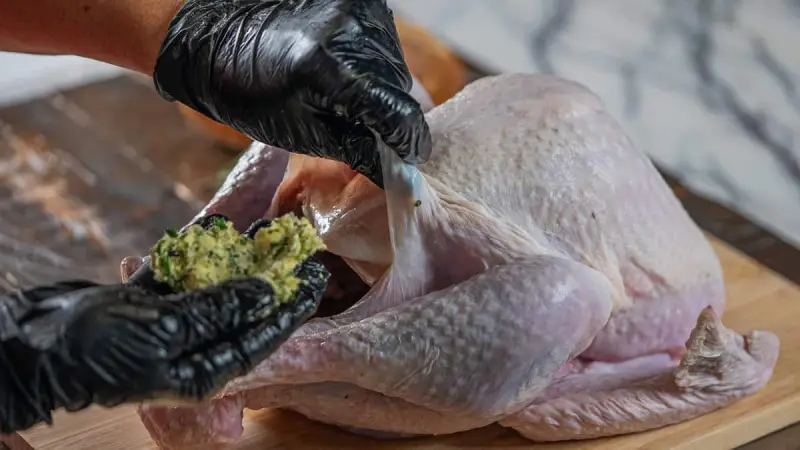
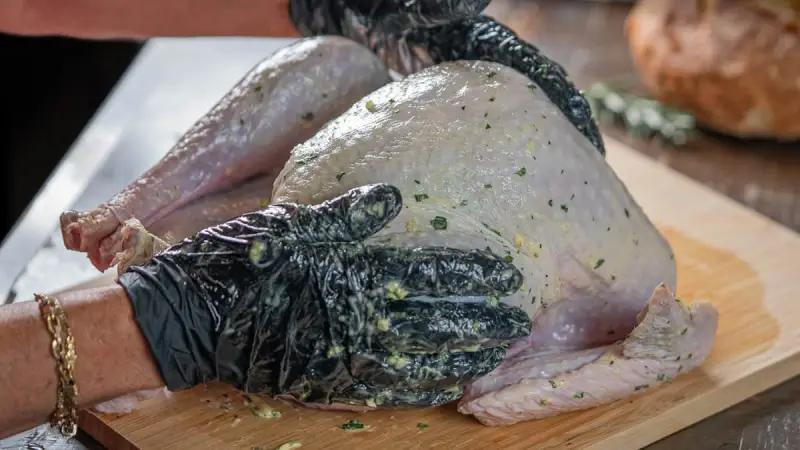
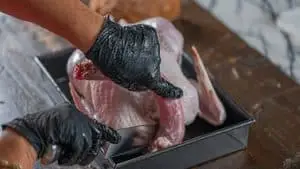
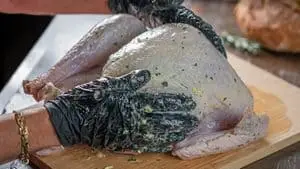
Gently loosen the skin and work the paste underneath, taking care not to tear it. Spread butter across the breast, wings and underside by massaging the skin from the outside. This placement lets the butter melt against the meat as the turkey cooks. If any paste remains, rub it over the outside too.
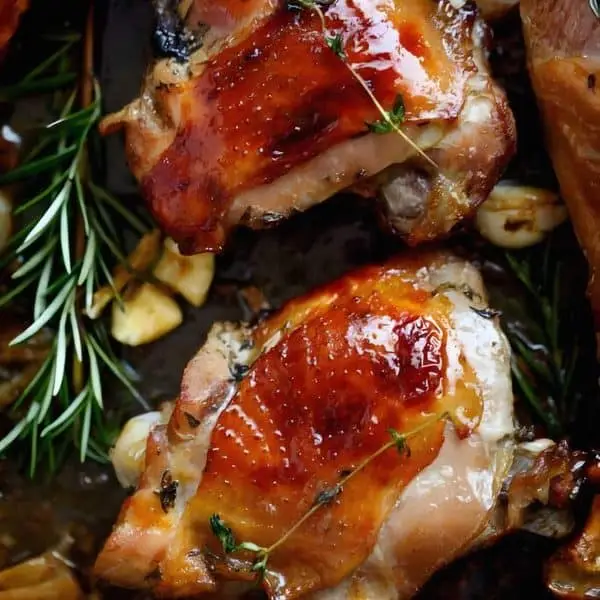
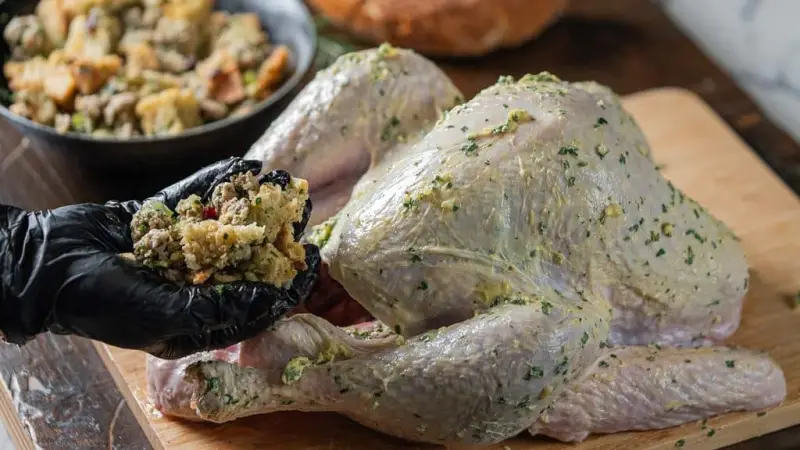
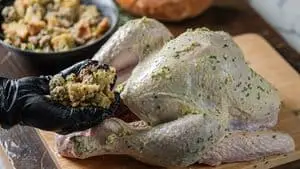
Spoon about 2 cups of warm stuffing into the neck and body cavities without pressing it down. Leave space around the filling so hot juices can circulate. Bake leftover stuffing in a separate dish.
Tie the legs and tuck the wings
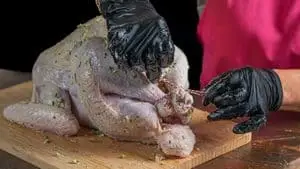
Lift the drumsticks and wrap kitchen twine around the bony end of one leg three times. Cross the legs, wrap the twine three times around the other end, then pull snug and tie a double knot over the top. Securing the legs helps close the cavity and keeps the bird in position as it roasts.
Cover the wing tips with small pieces of foil, bend the joints backward and tuck the wings beneath the bird. This helps protect the tips from overbrowning during the long cooking time.
Roast and baste
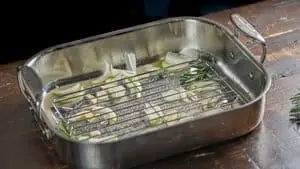
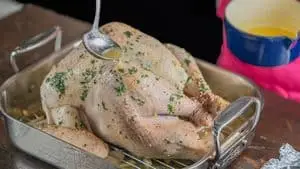
Heat the oven to 320°F (160°C). Set chopped garlic, rosemary sprigs, ¼ cup butter, ¼ cup white wine and 1 cup chicken stock in the roasting pan; add the sliced onion if using. Put a rack in the pan and set the turkey on top. Warm the stock and melt 50 g butter with white wine for basting. The recipe describes using this mixture to baste throughout cooking.
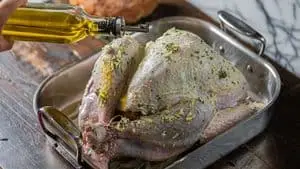
Drizzle the turkey with ½ tbsp olive oil and season with 1 tbsp salt and 1 tsp pepper, adjusting the salt to taste. The light coating of oil helps keep the butter from burning while the skin roasts.
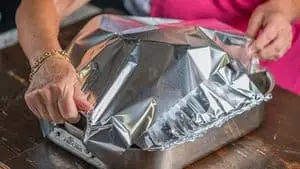
Butter the underside of a sheet of foil, then cover the bird. Roast covered for 2 hours and 45 minutes for an 11-pound turkey. Baste every 45 minutes with the warm stock, butter and wine mixture. Remove the foil for the remaining 30 to 45 minutes so the skin can brown and turn crisp.
Cooking time depends on the bird’s weight and the oven. The general guide is 15 minutes per pound, or 30 minutes per kilo. Use the table as a planning estimate, then check the actual temperatures rather than relying on time alone.
| Turkey weight | Covered at 320°F (160°C) | Uncovered | Total time |
|---|---|---|---|
| 8 lb (3.6 kg) | 1 hr 30 mins | 30 to 45 mins | 2 to 2 hrs 15 mins |
| 11 to 12 lb (5 to 5.5 kg) | 2 hrs 45 mins | 30 to 45 mins | 3 hrs 15 mins to 3 hrs 30 mins |
| 15 lb (6.8 kg) | 3 hrs | 45 mins | 3 hrs 45 mins |
| 20 lb (9 kg) | 4 hrs | 45 mins to 1 hr | 4 hrs 45 mins to 5 hrs |
| 24 lb (11 kg) | 5 hrs | 45 mins to 1 hr | 5 hrs 45 mins to 6 hrs |
For a larger bird, heat takes longer to reach the cavity, so keep to the 45-minute basting interval and allow enough time for the center to cook through. Check with a meat thermometer between the breast and the thickest part of the thigh, without touching bone, and in the center of the stuffing. The turkey and stuffing should reach at least 165°F. The thigh may reach 170°F to 180°F. Rest the turkey for at least 10 minutes before carving.
Make pan gravy from the drippings
While the turkey rests on a platter, skim excess fat from the roasting-pan juices until about 2 cups of liquid remain. If there isn’t quite enough, add chicken stock. Set the roasting pan over medium-high heat and bring the liquid to a boil.
In a small bowl, whisk cornstarch with a splash of water or extra stock until smooth. Pour the slurry slowly into the boiling juices while whisking constantly. The cornstarch thickens the gravy quickly and lets the garlic, herbs and roasted drippings stay prominent. When the gravy reaches the thickness you like, take it off the heat and season with salt and pepper if needed. Serve with carved turkey and stuffing.
Planning, substitutions and sides
For 10 guests, the guide suggests a 12- to 15-pound turkey, allowing 1 to 1.5 pounds per person. If you’re cooking for fewer people, an unstuffed roast turkey or roasted chicken is an option; glazed ham is another main dish to consider.
For a dairy-free paste, use a stick-style plant-based butter that can be mashed with the garlic and herbs. The recipe cautions against using extra virgin olive oil as the paste’s base because it can burn during a long roast. For gluten-free stuffing, choose a sturdy gluten-free sourdough loaf and toast the cubes in the oven for an extra 10 minutes before cooking the stuffing on the stovetop.
To make the stuffing vegetarian, replace sausage or bacon with diced cremini mushrooms and chopped pecans, and use vegetable broth in the pan so vegetarian guests can enjoy it too. Chicken stock can be homemade by boiling the neck and giblets, or store-bought. The recipe recommends stock rather than plain water in the roasting pan, since the liquid contributes flavor to the drippings and gravy.
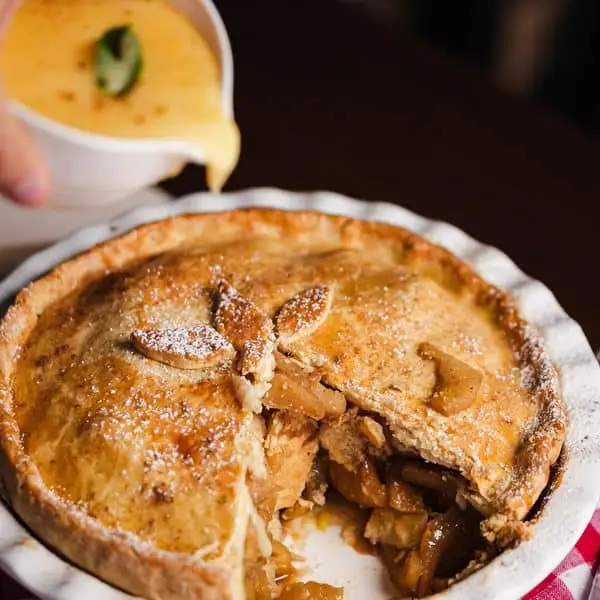
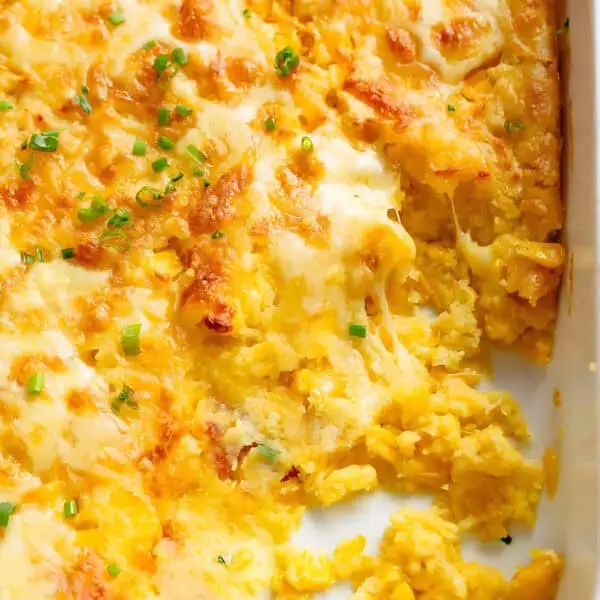
For the rest of the table, serve cornbread, corn or green bean casserole, sweet potato bake, mashed potatoes or garlic mac and cheese. Pumpkin pie or apple pie makes a fitting finish.
Prep ahead and store leftovers
The garlic herb butter paste and the stovetop portion of the stuffing can be made up to 2 days ahead and kept covered in the refrigerator. Wait until just before roasting to fill the turkey so the cavity can heat evenly.
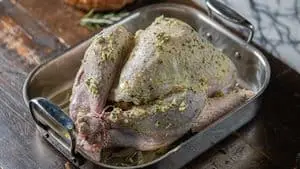
Thaw a frozen turkey in the refrigerator, allowing 24 hours for every 4 to 5 pounds, or keep it sealed and thaw it in cold water, changing the water every 30 minutes. Don’t thaw it on the counter. For a dry-brined or pre-brined bird, don’t rinse away the seasoning; pat the skin dry instead. The recipe also suggests letting the turkey sit out for 30 minutes before roasting.
After the meal, remove the bread stuffing from the cavity before storing. Keep turkey, stuffing and gravy in separate airtight containers in the refrigerator for 3 to 4 days. For longer storage, freeze sliced turkey with a splash of pan juices or chicken stock, and freeze the stuffing separately for up to 3 months. Thaw overnight in the refrigerator before warming.
To reheat, put sliced turkey in a baking dish with a few tablespoons of stock or gravy, cover tightly with foil and warm in a 300°F (150°C) oven for 15 to 20 minutes, until heated through. Warm stuffing in a covered dish alongside it, removing the foil for the final 5 minutes to crisp the top.
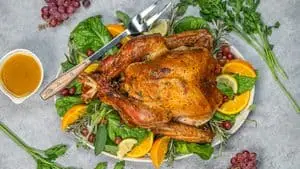
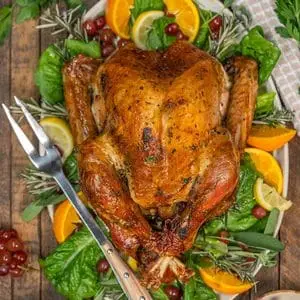
Save the carcass, neck, roasted garlic and onions to simmer in water for a couple of hours; the resulting turkey stock can be frozen in portions for soups. For the roast itself, the key is simple: warm, lightly packed stuffing, butter under the skin, steady basting and a thermometer check in both the meat and the filling.