Creamy French Onion Pasta with Caramelized Onions and Gruyère
- Karina Carrel
- 645 views
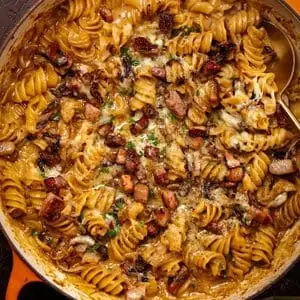
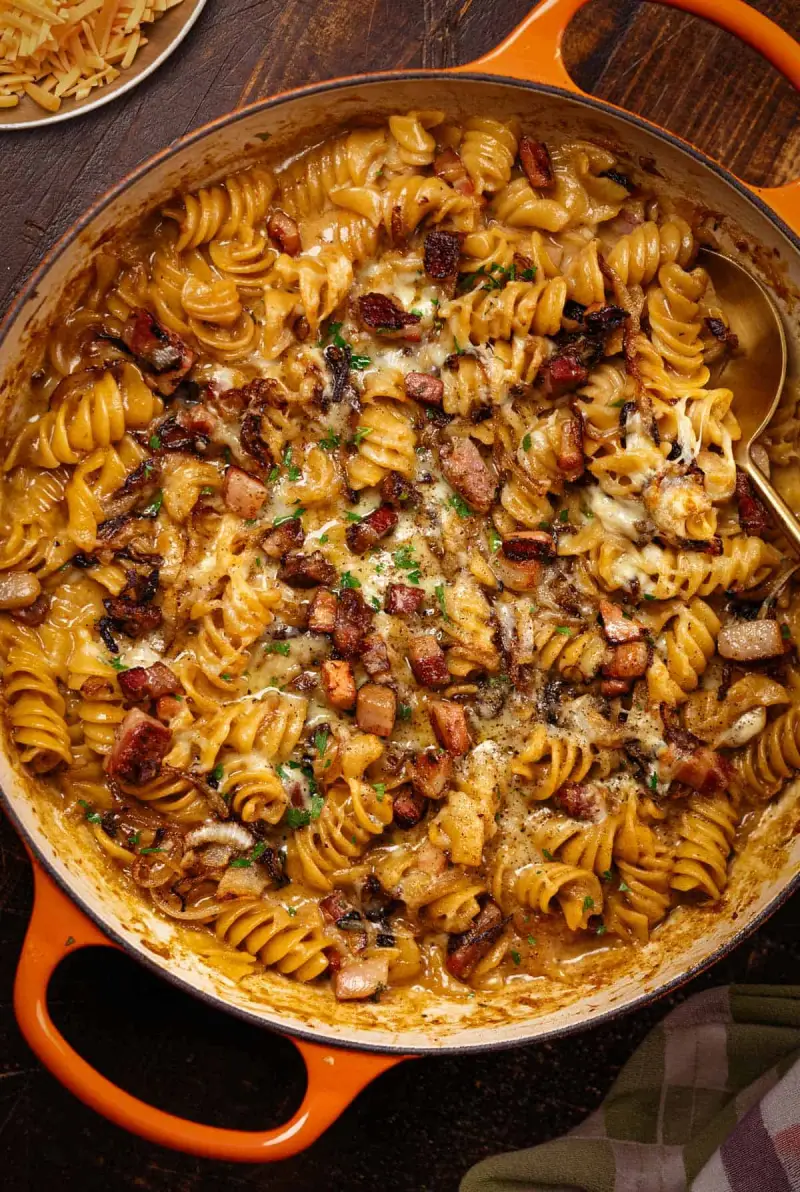
Caramelized brown onions, beef broth and Gruyère give this one pot pasta its French onion soup flavor, with pancetta adding savory depth.
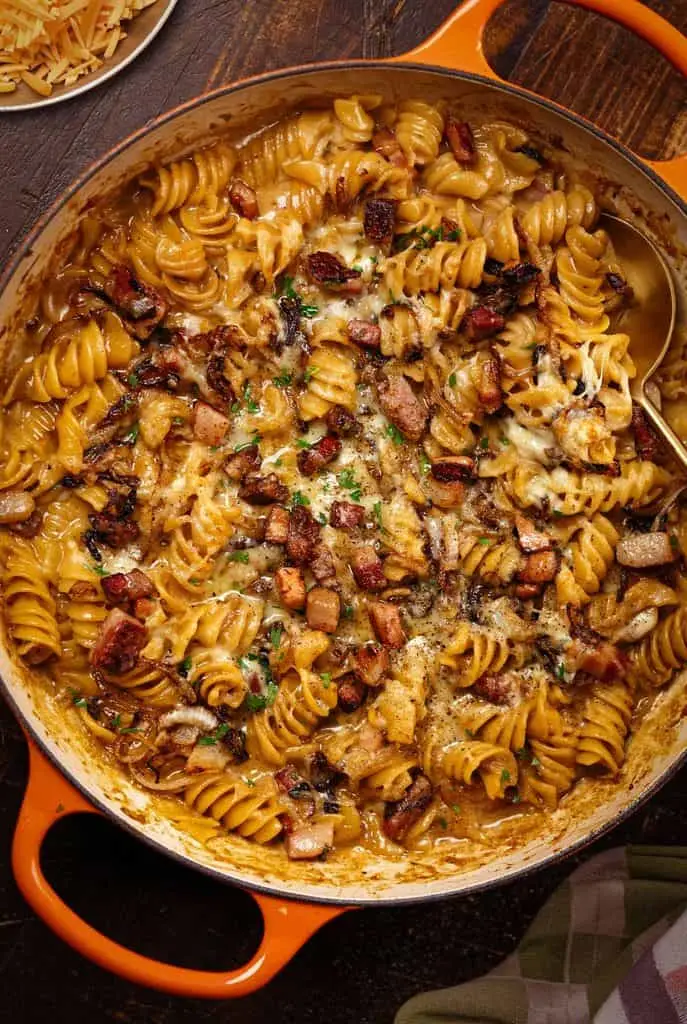
This one pot pasta gets its depth from the same place as French onion soup: slowly browned onions, beef broth and melted Gruyère. Here, short pasta simmers in the seasoned liquid, then cream and cheese turn the starchy broth into a thick sauce. Pancetta brings a savory, salty start, while thyme and white wine keep the finished dish from tasting too heavy.
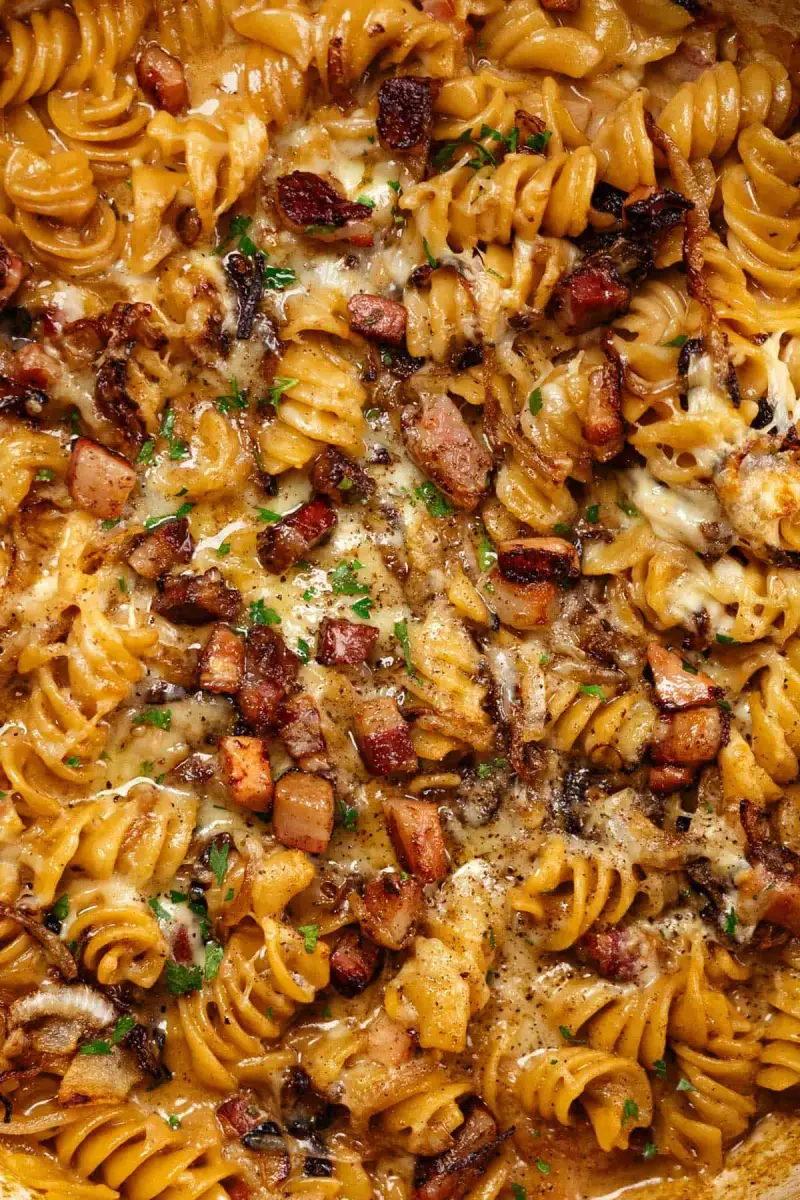
The technique to protect is the onion cooking. Give the onions time to soften and caramelize before adding the pasta; that concentrated, sweet base is what carries the soup inspired flavor through every bite. Cutting the onions evenly helps them cook at the same rate, and slicing from root to stem helps them hold their shape as they soften.
Ingredients and what they do
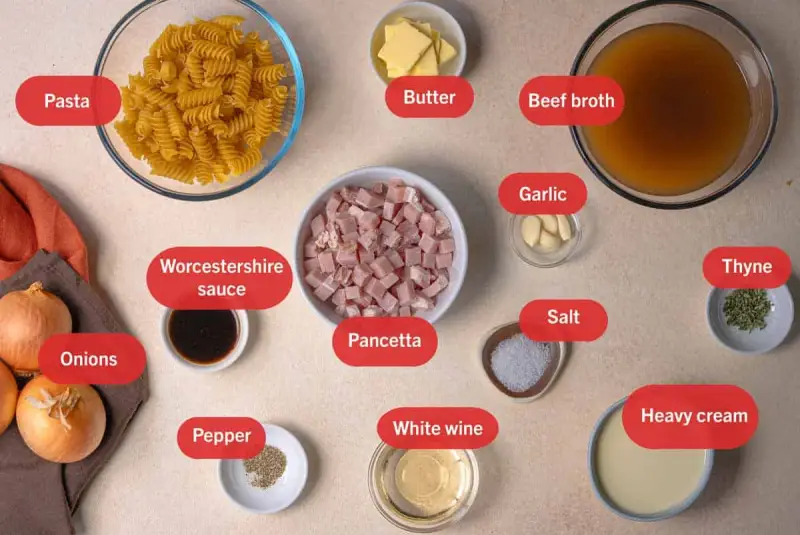
For six servings, gather ¾ cup chopped pancetta, 3 medium brown onions, thinly sliced, 2 tablespoons butter, salt and pepper to taste, ⅓ cup dry white wine, 1 teaspoon fresh or dried thyme, 10.8 ounces short pasta, 2½ cups beef broth, 1 tablespoon Worcestershire sauce, ½ cup heavy cream, 4 garlic cloves and 1½ cups grated Gruyère. The listed preparation time is 10 minutes, the cooking time is 10 minutes and the total time is 20 minutes.
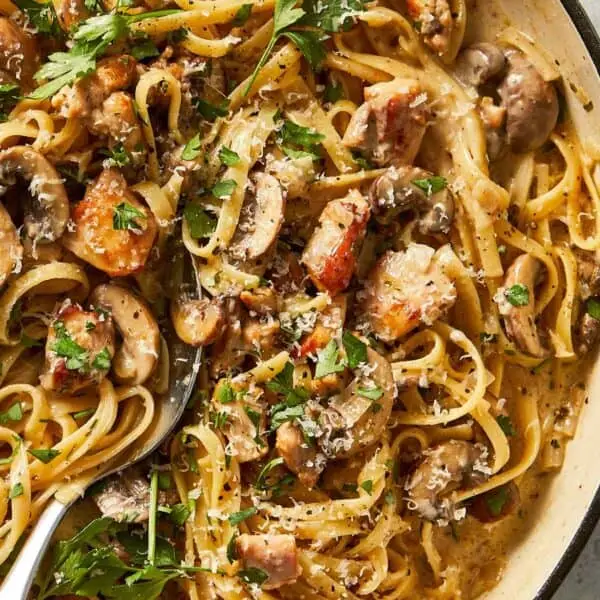
Brown onions are the best fit here: their balance of sweetness and structure lets them cook down to a jammy base. Slice them to roughly ¼ inch thick so thinner pieces don’t scorch while thicker ones are still firm. Avoid red onions, which won’t caramelize in quite the same way in this preparation.
Use a dry white wine such as Pinot Grigio or Sauvignon Blanc to loosen the browned bits from the pot and bring acidity to the rich sauce. Salty cooking wine can throw off the seasoning. To leave out the alcohol, deglaze with extra beef broth and a squeeze of lemon juice.
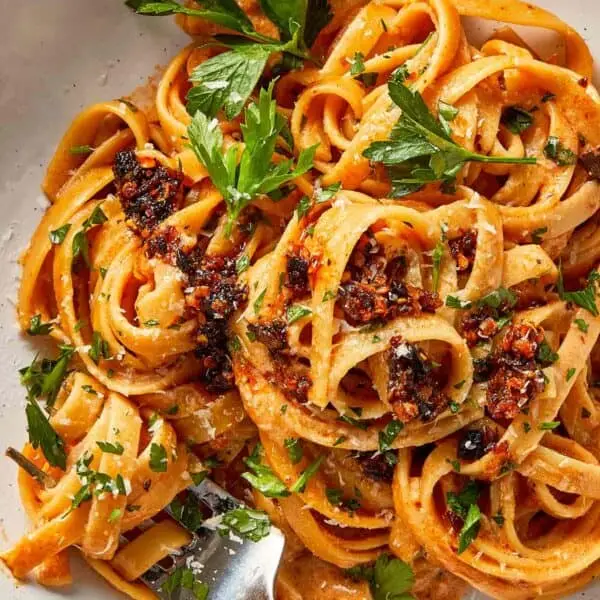
Beef broth seasons the pasta as it cooks, giving the noodles a fuller flavor than they’d get from water. Mushroom stock is the suggested alternative for a vegetarian version; chicken broth was tried and didn’t deliver the same bistro style taste. Worcestershire adds savory depth, while thyme brings an herbal note.
Grate Gruyère from a block for a smoother melt. If it’s unavailable, Swiss, Fontina or freshly grated Parmesan can stand in. The cream and cheese go in only after the pot comes off the heat, which helps the sauce stay smooth instead of turning oily or grainy.
Build the onion base carefully
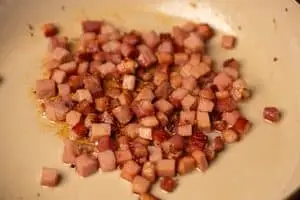
Start by cooking the pancetta in a large, heavy pot until browned and its fat has rendered. Set it aside, leaving the flavorful fat in the pot. Melt in the butter, then add the sliced onions, garlic, and a pinch of salt and pepper. Cover and cook over medium heat for 5 minutes. The trapped steam helps soften the onions without scorching them at the start.
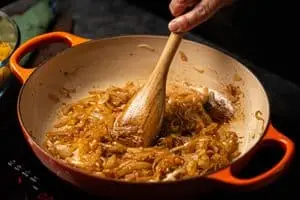
Uncover the pot and continue cooking, stirring every few minutes, until the onions are soft, translucent and deeply caramelized. If the bottom begins to darken before the onions are tender, add a small splash of water and scrape up the browned bits with a wooden spoon. That fond adds flavor; letting it burn would make the dish bitter. A little water can also help the onions cook down and caramelize more quickly.
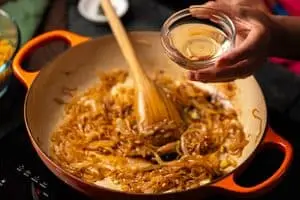
When the onions are ready, pour in the wine and scrape the base of the pot to lift the browned residue. Let it bubble for about a minute so the alcohol cooks off. Add the thyme and uncooked pasta, followed by the Worcestershire sauce and enough beef broth to just cover the noodles.
Bring the liquid to a boil, then reduce the heat to a simmer. Stir occasionally so pasta doesn’t stick to the bottom as it releases starch into the broth. That starch is useful: it helps the cream and cheese cling to the noodles later. Don’t rinse the pasta, and don’t add a full standard box; the recipe uses 10.8 ounces because a larger amount can absorb too much liquid before the noodles are tender.
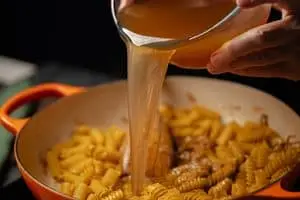
Stoves and pots vary, so watch the texture as the pasta cooks. If the broth disappears while the noodles still have a hard bite, cover the pot briefly to trap steam. If the pasta is tender and there’s excess liquid, let it bubble uncovered for another minute. The goal is pasta that has absorbed much of the broth, with enough moisture left to become sauce.
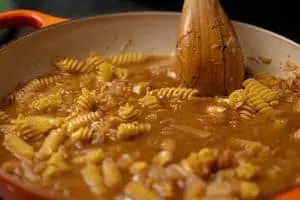
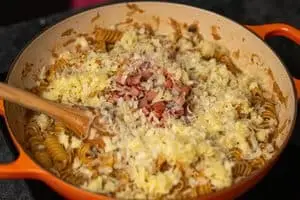
Remove the pot from the burner before stirring in the heavy cream. Add the Gruyère and reserved pancetta, then mix until the cheese melts and the sauce turns creamy. Residual heat is enough; keeping the pot over direct heat can cause the dairy to split. Serve while the sauce is smooth and glossy.
Easy variations and serving ideas
For a lighter sauce, full fat milk or evaporated milk can replace the heavy cream, though the result will be thinner. If you’re skipping pork, leave out the pancetta and add an extra tablespoon of butter so the onions have enough fat to cook without sticking. Thick cut bacon or speck are suitable pancetta substitutes.
Choose a short, ridged or curved pasta shape such as rigatoni, orecchiette, penne or shells. Their nooks and curves hold the sauce, and they’re easier to manage in the pot than long, thin noodles. Angel hair and spaghetti tend to clump and can overcook before absorbing the broth.
To add mushrooms, stir sliced cremini or button mushrooms into the pot once the onions have finished browning. They’ll absorb some of the butter and broth without overwhelming the onion flavor. For more protein, add shredded rotisserie chicken or seared chicken pieces at the end, just before the cheese.
A crisp salad dressed with vinaigrette cuts through the richness of the Gruyère and cream. Garlic bread, toasted French bread or buttered slices are natural companions for scooping up sauce. For a crunchy nod to the soup’s bread topping, toast panko or torn baguette pieces in a skillet with butter and garlic, then scatter them over the pasta just before serving. Extra mozzarella can be added on top, though a generous layer may cover the crunch of any bread topping.
Make ahead and storing leftovers
The pancetta and caramelized onion base can be prepared up to 3 days ahead. Store it in an airtight container in the refrigerator, then warm it in the pot and continue with the wine, pasta and broth when you’re ready to cook. This leaves the most hands on step out of the evening’s cooking.
Cool leftovers completely, transfer them to an airtight container and refrigerate for up to 4 days. Reheat in a skillet over medium low heat or in the microwave in 45 second bursts. Add a splash of beef broth, milk or water and stir as the pasta warms; the extra liquid loosens the cream and cheese back into a sauce and keeps the noodles from drying out.
Freezing isn’t recommended. The cream and Gruyère sauce can separate and become grainy after thawing, and the pasta may turn mushy. For the best texture, enjoy the dish freshly made or reheat refrigerated portions with a little added liquid.