Nestlé Opens Swiss Deep Tech Center for AI, Robotics and Product Development
- Donna Eastlake
- 367 views
Nestlé’s Orbe center will use AI, sensors and robotics to speed product development, improve manufacturing and explore personalised nutrition.
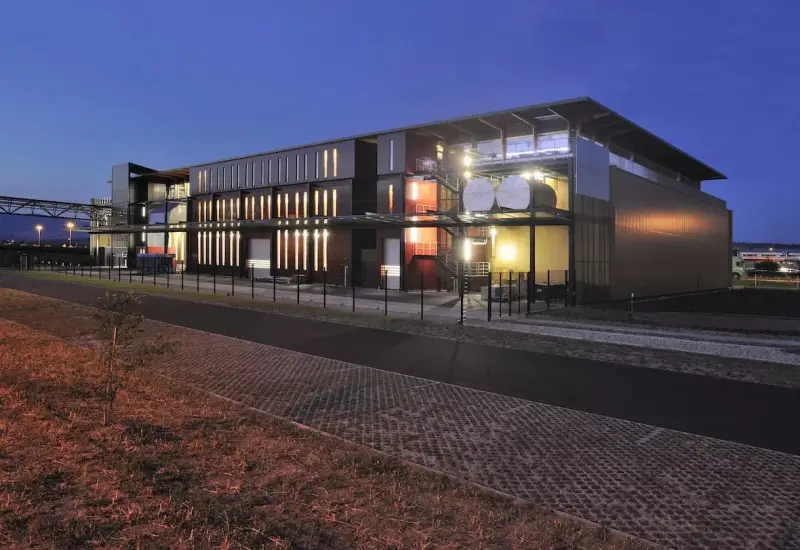
Nestlé’s new Deep Tech Center in Orbe, Western Switzerland, puts AI, sensors and robotics closer to the work of developing food and making it consistently. The facility is designed to test technologies and scale their applications across the company’s brands, linking consumer insights with research, engineering and manufacturing.
The center’s significance will depend on how well it turns technical capabilities into useful products and more reliable operations. Nestlé CEO Philipp Navratil has framed that relationship around the consumer: “Innovation at Nestlé starts with the consumer,” he says. “For us, technology is an enabler. It helps us understand consumers better, deliver superior quality, drive smart innovation and run more efficient operations. Ultimately, this supports our growth. Technology will change. Our starting point will always be the consumer.”
From data to product decisions
In research and development, AI, sensors and rapid prototyping are intended to help teams develop and test ideas faster. The practical advantage is a shorter loop between a product concept, the evidence gathered from testing it and the next adjustment. Faster cycles can give teams more room to compare ideas and refine a promising one before it moves further through development.
That only works if the information is useful. Sensors can capture measurements from laboratories and production lines; AI can help teams interpret the resulting data and identify patterns. Together, those tools could help staff see how a product or process behaves under different conditions. The center is meant to turn that information into applications teams can use, rather than treating technology as a separate experiment.
Stefan Palzer, Nestlé’s chief technology officer, says the center combines “smart sensors, AI and intelligent robotics” to turn data from labs and manufacturing lines into insights and applications. He describes advanced engineering technologies developed with technology partners as a way to respond faster to changing consumer and business needs while delivering quality at competitive costs.
Where automation fits
On the manufacturing side, sensors and robotics are intended to support consistency and efficiency. Monitoring equipment and production conditions can give teams a clearer view of how a line is running. Robotics can take on routine or physically demanding tasks, leaving staff more time for work that calls for their judgement, experience and creativity.
The expected gains include more timely detection of process changes and better opportunities to address inefficiencies. Predictive insights may help teams respond before a small deviation becomes a larger production problem. The center’s role is to test and develop those applications; the source does not give specific production targets, technologies by product category or a timetable for rolling them out.
Cost pressures also help explain the interest in these tools. Food and beverage manufacturers are dealing with rising ingredient, energy and labour costs, making productivity and quality important parts of the business case. For a company operating across many markets and production sites, modest improvements at individual facilities could add up when applied broadly. That potential depends on whether a technology works reliably in different settings and can be adopted at a sensible cost.
Personalisation, with a practical test
Nestlé says AI-powered solutions could help it deliver personalised nutrition at scale. The broader possibilities described include individualised nutritional guidance, tailored supplement recommendations, customised beverages and product suggestions that respond to changing lifestyles and health goals. These are prospective uses, rather than a list of products the company says the Orbe center has already launched.
Personalisation can also apply to preferences beyond nutrition. In confectionery, analysis of consumer behaviour could inform flavour combinations, limited-edition products and more targeted promotions. The test for any such approach is whether the resulting product or service feels relevant to people and can be produced consistently. More data alone does not guarantee a better fit; teams still need to decide which patterns matter and how to translate them into an appealing product.
That makes the center’s connection between consumer insight and technical testing central to its purpose. As expectations for products tailored to individual preferences grow, manufacturers are looking for ways to identify needs and respond at greater scale. AI could make analysis more manageable, while product development and manufacturing teams determine whether an idea works beyond a digital model or a small test.
Efficiency and the wider innovation network
Sensors and data analysis may also help manufacturers spot waste, use resources more efficiently and improve traceability across supply chains. Those are possible contributions to Nestlé’s sustainability ambitions, alongside operational benefits. The center’s stated focus is on developing applications; the available details do not specify particular environmental targets or quantify expected savings.
Orbe joins Nestlé’s hub in Shenzhen, China, which was established in March 2019. The Shenzhen site will help identify promising technologies and speed their adoption, complementing the Swiss center. Together, the facilities form part of a wider innovation network connecting research, engineering and digital expertise across products, brands and regions.
The next measure of progress will be how these trials translate into everyday work: quicker product testing, more consistent manufacturing and applications that meet a real consumer need. That consumer focus is the clearest guide to what the new center is meant to deliver.